EV & MobilityNews wire, 12 Nov 2026
Lunar Energy unveils 25 kW home DC charger that links EVs to home batteries
Reported by Electrek, pv magazine USA
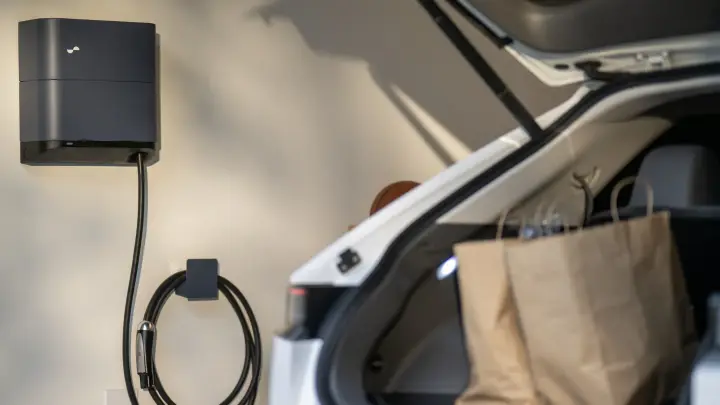
Lunar Energy has announced a 25 kW home DC fast charger that works with its next-generation home battery. According to Electrek, a compatible electric car could help keep the house running during an outage and could earn money by sending power back to the grid. pv magazine USA reports the same plan.
The updated battery system, called the Lunar System, is due to reach customers in early 2027. Electrek says the charger is expected in mid-2027, while pv magazine says it will launch later in 2027.
The new hybrid inverter gives 13.4 kW of continuous output, up from 9.6 kW on the current model. Battery stacks use 5 kWh blocks, and a stack of six gives 30 kWh. Up to ten stacks can run in parallel, for 300 kWh and 134 kW of continuous output. Pad-mounted setups for larger sites can reach 1 MWh, but pv magazine says further details were not disclosed.
Lunar says the charger can add about 100 miles of range in an hour at 25 kW. Actual results depend on the vehicle and charging conditions. Electrek reports that the charger connects to the DC side of the battery, which Lunar says avoids an electrical panel upgrade. The product page lists CCS and NACS connectors.
The two reports differ on one detail. pv magazine said Lunar had not disclosed whether the link to the car uses AC or DC. Electrek, citing product specifications, describes a DC charger.
Lunar says that with a compatible car, vehicle-to-home power could keep a house supplied through a multi-day outage. How long that lasts depends on the car's battery capacity and what the house runs. Neither report names compatible EV models. Electrek stresses that charging a car and sending power back are separate abilities, so buyers must check vehicle support before relying on backup.
Payments for sending power to the grid depend on programs that are not yet widely available. Lunar says such programs are becoming available, but they are not an automatic benefit of installing the charger.
The system is managed by Lunar AI, which uses electricity prices, weather forecasts and the home's energy use to decide when to charge or supply power. Adding a car gives the software another battery to coordinate with rooftop solar and household storage. The company says its California customers were about $338 better off on average last year than under a conventional battery schedule. This is the company's own figure and has not been independently checked.
Business sites can use the system for backup and to cut peak power fees. Lunar also operates a platform that groups distributed energy devices into virtual power plants in several US states, as well as in Europe, the UK and Japan.
Lunar has not disclosed pricing for the charger or the battery. It has also not named the cars that will support bidirectional charging. Homeowners will need both before deciding whether the setup suits their home and driveway.
Enjoying this? Get the EV & Mobility brief
Every Wednesday: charging, cars and costs.
✓ Free · seven editions · one click to leave
How each source covered it
Original reporting by the sources above. Summary by smart-home.space.