EV & MobilityNews wire, 13 h ago
Tesla tightens FSD driver checks in Europe while US rules loosen
Reported by Electrek
The Dutch vehicle authority RDW has approved an over-the-air update to Tesla's driver-assist software in Europe. Tesla now calls the system Tesla Assisted Driving in the region. The update covers HW4 vehicles. According to the RDW, drivers now get attention warnings earlier, and a driver who is not watching the road during a manoeuvre receives a full strike.
Speed rules are stricter too. Above 130 km/h, where legal, drivers must keep their hands on the wheel. Setting a maximum speed above the one the system displays requires the driver to confirm it with the scroll wheel, and the speed limit sign flashes red when the car goes over. The RDW says the update also adds measures against misuse, but it has not described them.
The RDW says it tested the update on its own test track and on public roads and found no negative or unintended effects. Ten other countries have accepted the Dutch approval so far, and Finland is the latest. EU-wide approval still depends on a vote by the TCMV, the committee of member states.
The change follows an earlier move in Europe. About two weeks before, Tesla cut the speed margin for the system from 50% to 10% above the limit and dropped the Full Self-Driving name in the region. Germany had made both changes a condition for supporting EU approval.
The approach in the US runs the other way, according to the report. At Tesla's shareholder meeting last year, Musk said the system was too strict about keeping eyes on the road and said texting while driving would be allowed within a month or two. A month later, an owner asked whether FSD v14.2.1 allowed texting. Musk replied that it depended on the traffic around the car.
The report notes that texting while driving is illegal in 49 states. Tesla still classes FSD as a Level 2 system, and its own terms say the driver is responsible at all times. In May, Musk confirmed that FSD v14.3.3 was built to prompt drivers less often. A June build added better eye-gaze tracking and better handling of eyewear, the report says.
US drivers have been allowed to go hands-free on FSD at any speed since Tesla moved to cabin-camera monitoring in 2024. There is no 130 km/h rule in the US. The National Highway Traffic Safety Administration has taken notice. In an engineering analysis of FSD crashes in low-visibility conditions, it asked Tesla to justify a list of marketing claims, and it cited Musk's texting remark. In September, Representative Raja Krishnamoorthi asked NHTSA to examine Tesla's driver monitoring after dozens of videos appeared to show drivers asleep while using Autopilot or FSD.
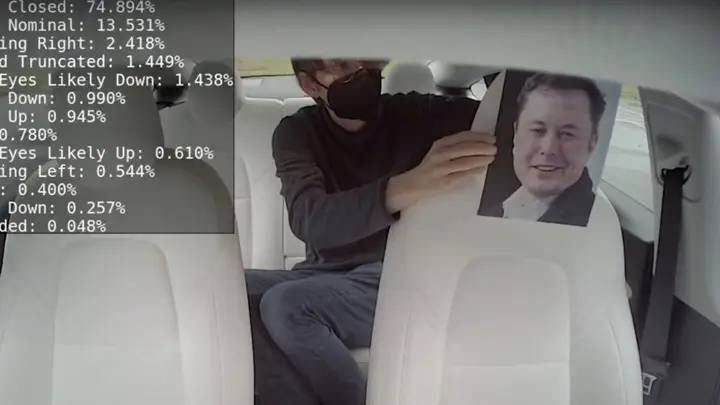
The report also describes a recent crash. Last month, a driver told the California Highway Patrol that he had been asleep on FSD when his Tesla drove through a freeway closure and hit a patrol car, seriously injuring two officers. Owners are also filming themselves defeating the driver monitoring and posting the clips online.
Both markets use the same cabin camera and the same HW4 computer, according to the report. In Europe, a type-approval authority tests each update before release and can refuse it. In the US, driver-assist software is not checked in advance. Tesla certifies its own software, and NHTSA usually acts only after complaints and crashes build up. The European update shows that Tesla can ship stricter monitoring when a regulator requires it. The report argues that the looser US approach is hard to justify.
Several points are still open. The report does not say what the anti-misuse measures in Europe are. EU-wide approval has not been granted. The sources do not say whether Tesla will bring the stricter European monitoring to US cars.
Enjoying this? Get the EV & Mobility brief
Every Wednesday: charging, cars and costs.
✓ Free · seven editions · one click to leave
Original reporting by the sources above. Summary by smart-home.space.