GadgetsNews wire, 23 h ago
Hisense UR9 review: RGB Mini LED TV narrows the gap with OLED
Reported by Digital Trends
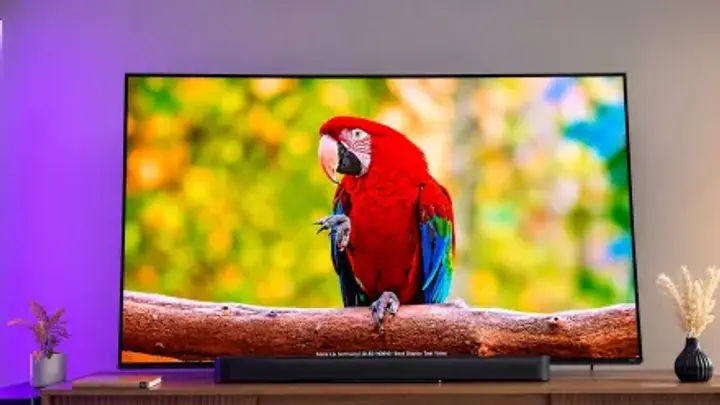
The Hisense UR9 is a 65-inch television that uses RGB Mini LED technology, according to a review published by Digital Trends on 25 November 2026. The reviewer describes it as a bold step for the brand, aimed at a wider audience than its top-end sets. Most Mini LED televisions use a white LED backlight, with colour produced by layers on the panel. The UR9 takes a different route. It places individual red, green and blue LEDs behind the screen and uses them to make light and colour directly. The stated aim is a wider colour range, higher brightness and finer control over the backlight.
The specifications are large. Hisense claims a peak brightness of up to 3,500 nits, 980 local dimming zones and a native 180 Hz panel. The set is powered by the company's Hi-View AI Engine RGB processor. Hisense places it above the cheaper UR8 in its range. The reviewer says the price puts the UR9 in direct competition with some of the best OLED televisions on the market. The main question of the review is whether the set offers enough to justify that position.
The picture is the strongest part of the review. The reviewer says backlight control is excellent. Bright white text on a dark background looked clean, blacks looked deep, and there was very little glow around highlights. Flicker, brightness shifts and changes in backlight intensity between scenes were rare. In a film with dark scenes, the reviewer found good depth and strong shadow detail, and reds looked rich. Brighter HDR content gave highlights plenty of punch without the image looking overprocessed.
The UR9 has limits. A backlit screen cannot remove blooming completely. In very demanding scenes, such as a starfield, some glow stays visible around bright objects. The reviewer explains that OLED panels control each pixel on its own and can switch pixels off completely. This gives OLED an advantage with perfect blacks and highlight control. OLED also keeps the lead for absolute contrast and viewing angles. The reviewer says the UR9 comes surprisingly close in many situations, but the gap has not closed.
The built-in audio uses a 4.1.2-channel speaker system developed with Devialet. It includes up-firing speakers and supports Dolby Atmos and DTS. The reviewer found the sound spacious, with good width and height, and bass with decent depth. The speakers stayed controlled at higher volumes. Dialogue lacked some clarity and presence, and action scenes could use more punch. Theatre Mode made voices sound distant or echoey in the reviewer's tests, so Standard Mode was the preferred choice. The reviewer still recommends a dedicated soundbar for a proper home cinema setup.
For gamers, the set offers a native 180 Hz panel and support for 4K 120 Hz console gaming. A DisplayPort input suits gaming PCs. The reviewer counts only three HDMI 2.1 ports, which may be tight for a setup with several consoles and devices. The US version runs Google TV and gives access to major streaming services, including Netflix, Disney Plus, Prime Video and YouTube. On design, the review describes slim bezels, a dark metallic finish and a centrally mounted pedestal stand with two height settings. The set is about 4.5 centimetres thick, which the reviewer calls noticeably thicker than many premium OLED models.
The excerpt available to us does not give the price, the release date or regional availability beyond the US software details. The review continues past the sections we could read, so the full verdict on software and value is not covered here. Only one source reports on the UR9 in this set, so there are no conflicting reports to compare.
Enjoying this? Get the Gadgets brief
Every Monday: the gadgets worth your money.
✓ Free · seven editions · one click to leave
Original reporting by the sources above. Summary by smart-home.space.