AINews wire, 13 Nov 2026
Claude and Codex help a 1994 Jeep pass California smog tests with a $3 board
Reported by Tom's Hardware, The Drive
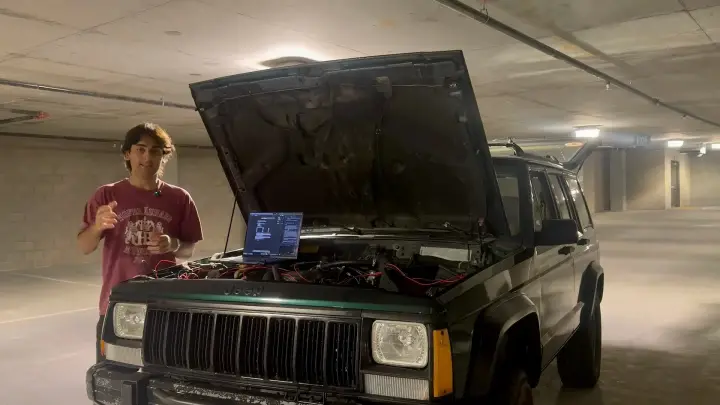
A hobbyist used AI tools to get his 1994 Jeep Cherokee past California smog testing. The owner, Muhammad Zulali, documented the work in a video, according to Tom's Hardware and The Drive. The car failed because it produced too much NOx at certain test speeds, and it was not an easy fix to find.
The XJ Cherokee is 32 years old and has an early engine computer with no OBD-II port. A standard plug-in scanner could not read its fault codes. The only Chrysler-specific scan tool that fit the model year is hard to find now, and it offers limited data, The Drive reports. Zulali instead asked Claude, which identified the computer's communication protocol and suggested an Arduino Nano to translate it.
The Nano cost about $3. Tom's Hardware says the engine talked on a Chrysler SCI bus at roughly 7,800 baud, with an electrically inverted signal compared with a typical serial port. The Nano handled that inversion and passed the data to a modern laptop. Three wires linked it to the six-pin diagnostic plug. The total bill of materials stayed at or below $15, according to Tom's Hardware.
The first readings showed only coolant temperature and battery voltage. Claude then suggested the engine was running rich, with about 22 percent extra fuel, based on data from other models. Tom's Hardware calls this a red herring. The Drive says Zulali tested low fuel pressure next. Claude asked to run the fuel pump and raised the pressure on its own, but this did not fix the problem, because the suggestion rested on a faulty dataset.
Tom's Hardware reports that the first adjustments to the oxygen mix made the emissions worse. The car then failed at both 25 mph and 50 mph. Each official retest cost nearly $100, and Zulali admits he was working partly blind. Later, Claude copied the full engine code so it could be studied away from the car. The Drive says the team concluded the fault was a fuel-mapping issue.
The ECU was too old for ordinary reflashing. Tom's Hardware says Zulali used Codex, OpenAI's coding agent, to inject and run custom code in a nearby EEPROM chip. The Drive describes this as a reflash. Either way, the modified car then passed its emissions test without a trip to a shop or a dealer tool. Zulali published the project as xj-scanner on GitHub under the GPLv3 licence.
The result comes with caveats. Both outlets say the work required real programming knowledge. The Drive suggests most owners would be better served by a mechanic who can find the root cause. Tom's Hardware reader comments raised the same concern: a software change may hide a worn sensor, catalytic converter or other part. Neither report confirms the underlying cause. The project shows what AI tools can do with old hardware, but it does not show that the fix is durable.
Enjoying this? Get the AI brief
Every Thursday: AI that matters for your home.
✓ Free · seven editions · one click to leave
How each source covered it
Original reporting by the sources above. Summary by smart-home.space.