AINews wire, 18 Nov 2026
VoiceStudio: a free open-source voice cloner and dubber that runs offline
Reported by XDA Developers
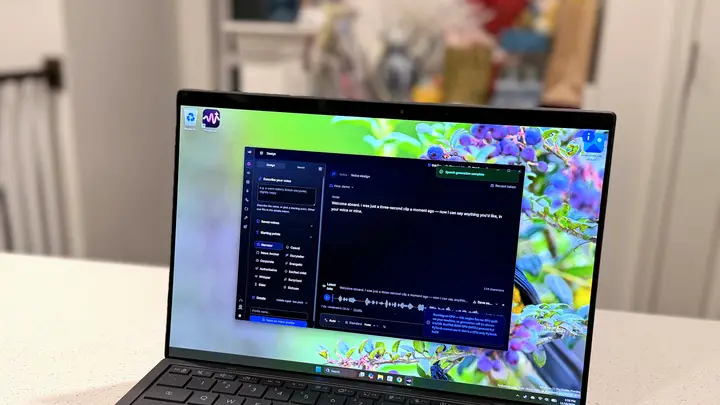
XDA Developers tested VoiceStudio, a free open-source tool that clones voices, dubs video and transcribes speech on the user's own computer. The project is widely described as an open-source alternative to ElevenLabs and has passed 110,000 stars on GitHub. The author reports that it needs no account.
The reviewer installed version 0.5.8 on a Linux setup inside WSL2 on Windows, using Ubuntu 24.04 LTS. The Windows installer is unsigned, and the project says its signing application is still pending, so the reviewer chose the Linux build with CUDA support. The test machine had an Nvidia GeForce RTX 5090 with 32GB of VRAM. The first install looked finished, but the app did not respond until its Python environment had fully set up. The reviewer's advice is to wait for the app to be ready before using it.
For the dubbing modes, VoiceStudio uses a local language model to refine translations. The author ran Lemonade Server with the Qwen3.5-9B model, a 6.4GB download at Q4 quantisation. By default the model spent a large number of tokens on internal reasoning when translating a short German greeting. Reloading it with reasoning switched off fixed the delay, and the same prompt then finished in a fraction of a second. Both services ran on one loopback address, so no bridge between Windows and Linux was needed. The settings page lets users pick a custom provider and enter a base URL and model name. The author got a 404 error by pasting the URL into the model field, so the fields need to be filled in correctly.
To clone the voice, the reviewer read the opening of a public-domain book and trimmed the recording to 30 seconds. The clone reproduced the author's pacing, pitch, accent and breath sounds. Generation was fast. The reviewer timed a 58-word paragraph and found that the GPU produced about 20 seconds of speech in 2.3 seconds, roughly 8.6 times faster than real time.
The clone was not flawless. In the first session, the phrase "mini PC" came out wrong, and words ending in an "s" sound were drawn out. A built-in voice pronounced "PC" correctly but sounded metallic. On a later clean start, the clone handled the same word correctly, so the reviewer concluded that the fault was not permanent. Regenerating the audio did not fix it, but restarting the app did.
Dubbing needed more work. The reviewer used a 1-minute 45-second explainer about the Alps from ZDF's Terra X series, which is published under a Creative Commons BY 4.0 licence. VoiceStudio split the clip into 15 segments. Generating the English audio took about 15 seconds, with roughly 10GB of VRAM in use across the GPU, including the language model. The first dub sounded like a German speaker reading English. A notice said automatic voice cloning had been skipped because the speaker labels were only estimates based on gaps in the audio. The app pointed to a diarization model. The reviewer built a voice profile from the narrator's audio and assigned it by hand, which gave a clearer result, though a faint hiss remained before some words. The translation also needed checking. In one pass, a sentence was mistranslated and another was left in German. The built-in checker flagged only one line, for timing.
In the final test, the reviewer turned off Wi-Fi, confirmed that the PC could not reach GitHub, then restarted the app. The whole chain ran without an error: importing a local copy of the clip, transcription, translation through the local model, voice cloning and the dub. The result was the cleanest of the tests, with no translation or dubbing problems that the reviewer could hear. Generation took 3.1 seconds for 20 seconds of audio, about 6.3 times real time, which the reviewer did not fully explain.
The one exception to the no-account claim is diarization. The model page for the pyannote tool asks users to sign in to Hugging Face and accept its conditions. The reviewer skipped this step and assigned the voices manually. The reviewer also said the app gives little feedback during import, and suggested that a progress bar would help. The reviewer did not compare the output directly with ElevenLabs, so no quality ranking against that service is claimed.
Enjoying this? Get the AI brief
Every Thursday: AI that matters for your home.
✓ Free · seven editions · one click to leave
Original reporting by the sources above. Summary by smart-home.space.