EnergyNews wire, 12 h ago
Always-on home gear can add about $115 a year to power bills, one test shows
Reported by XDA Developers
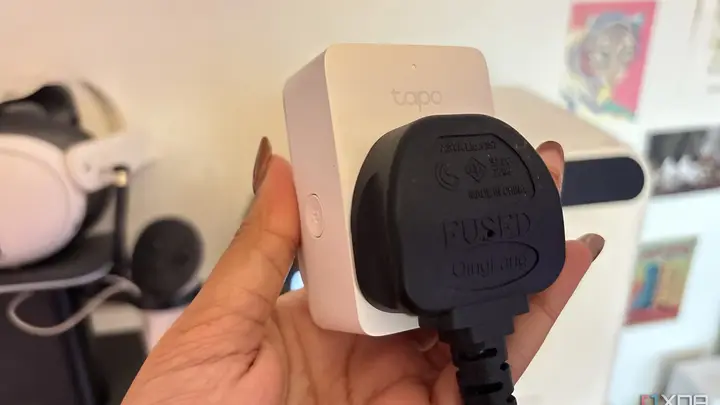
A writer at XDA Developers placed a Tapo P110 energy monitoring plug between a wall socket and the backup power supply of a home lab, then tracked the load for one week. The plug measured the whole rack as one load, not each device. The result was an average draw of 72 W, or about 12.1 kWh over seven days.
The main surprise was the idle baseline. The setup never reached a deep-sleep state, because the smart home hub doubles as a network video recorder and keeps its drives spinning. The lowest reading was around 62 W and the highest around 80 W. The rack also rose by roughly 4 W each evening after sunset, which the writer links to the infrared night vision LEDs on two PoE cameras.
The writer also estimated what each device contributes, using manufacturer specifications. The mini PC was put at 12 to 13 W, the two-bay NAS at about 12 W, the smart home hub with two hard drives at 20 to 26 W, and the managed PoE switch at about 25 W. These are estimates, not separate meter readings. The writer checked the plug figures against published specifications and independent wall meter benchmarks instead.
Scaling the weekly figure by 52.14 gives about 630.7 kWh a year. The writer then used the United States national average residential price of 18.16 cents per kWh. That price comes from the EIA Electric Power Monthly table, released in October 2026 with August 2026 data, and it is 3.4 percent higher than a year earlier. On that basis the writer estimates a cost of $114.54 a year, or roughly $9.50 a month.
Location changes the bill a great deal. In Louisiana, where the average is 12.87 cents per kWh, and in North Dakota, at 13.31 cents, the same load would cost between $81 and $84 a year. In California, where electricity averages around 29.75 cents per kWh, the writer gets $187.64 a year. In Hawaii, at 47.18 cents per kWh, the figure reaches $297.57.
The article also checks the plug itself. The writer looked at its rated voltage, frequency and current. A US National Electrical Code guideline says a 15 A circuit should not carry more than 12 A continuously. A power strip does not raise that limit, because it still uses one socket. The plug's own overhead is listed at 1.64 W with the relay active and 0.64 W in standby.
The writer read the figures in the Tapo app's bar charts. Another option is local polling through Home Assistant, which records real-time wattage, current and cumulative kilowatt-hours, if the plug supports it. The plug is also described as offering energy consumption control and working with Alexa, Google Home and voice control.
The test covers one home lab in one setup. Results will differ with other devices, daily habits, region and tariff. The writer did not test the plug's accuracy against a separate reference meter for each device, so the per-device figures remain estimates.
Enjoying this? Get the Energy brief
Every Friday: prices, subsidies and what changed in your market.
✓ Free · seven editions · one click to leave
Original reporting by the sources above. Summary by smart-home.space.