EnergyNews wire, 7 h ago
Black Friday power stations: what to check for home backup and solar
Reported by TechRadar
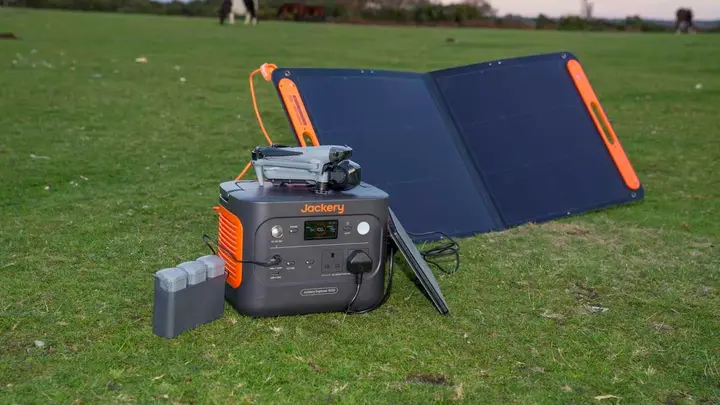
TechRadar published a Black Friday roundup of portable power stations on 28 November 2026. The writer tested several models and picked units from Bluetti, DJI, EcoFlow, Jackery and Anker that can serve as home backup and accept solar input. The piece lists deals in both UK pounds and US dollars, and the prices are the ones shown at the time of writing.
Battery size is the first choice. According to the article, a mobile unit is realistically up to about 4 kWh, and much above 3 kWh is hard to move without help. Static home units can be larger and can often be expanded later, because a home cannot run for long on even 5 kWh. The writer gives a typical UK household figure of 10 to 15 kWh per day. He also notes that most batteries cannot run several heavy appliances, such as an oven, kettle and washing machine, at the same time.
Among the smaller models, the Jackery Explorer 1000 V2 is described as the cheapest UK battery in the list. It has 1500 W output and a carry handle for use in a car or truck. The EcoFlow Delta 3 Classic has 1024 Wh of capacity and 1800 W output. The writer says it can be recharged in about an hour and praises its mobile app. Its solar input is limited to 500 W, so a full charge from panels on a sunny day may take around 90 minutes. The Anker Solix S2000 offers more capacity but outputs up to 1500 W. The DJI Power 2000 gives 3000 W continuous output, but the writer finds its solar charging weaker and says it uses a separate MPPT adapter box.
The heavier units suit home backup more than travel. Bluetti's Elite 300 is listed at 3 kWh and 2400 W, and weighs 26.3 kg. The larger Elite 400 is rated at 3840 Wh and 2600 W continuous output, but weighs 39 kg, so it needs its wheels and handle. The DJI unit has 2048 Wh from LiFePO4 cells and can reach 80 percent charge in 45 minutes. The EcoFlow STREAM 5000 is the largest option in the roundup. It holds 5 kWh, can expand to 90 kWh, delivers up to 3000 W AC output and accepts 5000 W of solar input. The writer says it needs an electrician to connect it to the house wiring. With the deal, it costs £100 less than before. The source gives a rated life of 10,000 cycles, or 15 years.
Some figures in the article do not agree. The Elite 300 is given as 3 Wh in one place, which appears to be a typo for 3 kWh, and the buying advice mentions 2 Wh batteries where it likely means kWh. Some UK and US details also differ, such as the number of sockets on one model. The writer quotes a per-kWh price in dollars for a unit that has a UK price in pounds, so readers should check the figures on the current shop page.
The article does not say how long these offers will run, or whether stock is limited in each country. It also does not confirm the full specifications of every model it mentions, and some units are only described from the writer's earlier reviews.
Enjoying this? Get the Energy brief
Every Friday: prices, subsidies and what changed in your market.
✓ Free · seven editions · one click to leave
Original reporting by the sources above. Summary by smart-home.space.