EnergyNews wire, 2 h ago
BNEF sees Australian solar reaching up to 215 GW by 2050
Reported by pv magazine
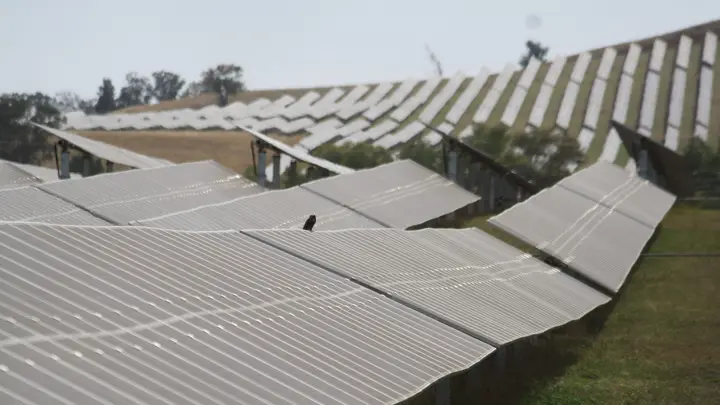
Bloomberg New Energy Finance (BNEF) expects solar to become the largest part of Australia's power system by mid-century. Its latest New Energy Outlook for Australia, as reported by pv magazine, puts solar capacity at 137 GW by 2050 in a base case and 215 GW in a faster transition. Solar stood at 43 GW in 2025.
The two scenarios differ in policy. The base case, the economy transition scenario, assumes commercially available technologies are deployed with existing measures only. The net zero scenario assumes fully decarbonised power, transport, industry and buildings by 2050. Under it, solar capacity would be roughly five times its 2025 level.
Wind and storage grow in both cases. Onshore wind rises from 15 GW in 2025 to 61 GW in the base case and 107 GW under net zero. Stationary battery storage rises from 5 GW to 45 GW and 50 GW respectively. BNEF says the larger storage fleet under net zero reflects the need for more flexibility.
BNEF also warns that Australia is unlikely to meet the federal target of 82% renewable share of generation by 2030. It projects 64% under net zero and 61% in the base case by 2030. Net zero reaches the 82% target in 2035, while the base case reaches 78% that year. The report author, Sahaj Sood, names slow grid expansion, social licence concerns, permitting delays and rising demand as possible reasons the 2030 goal is out of reach.
Power demand grows strongly in both scenarios. The base case reaches 339 TWh by 2050, up 50% from 2025, while net zero reaches 506 TWh. Electric vehicles add 52 TWh in the base case and 69 TWh under net zero. Data centres add 38 TWh in both.
BNEF puts the 2025 benchmark cost of utility-scale solar at about $44 per MWh and onshore wind at $77 per MWh. Both are already below new coal or gas generation, according to the report. By 2050, solar costs are modelled to fall 63% to about $16 per MWh.
The outlook is a modelling exercise, not a build plan. The results depend on policy, grid upgrades and permitting, which the report says are still slowing deployment. The pv magazine excerpt does not give the full set of assumptions behind each scenario.
Enjoying this? Get the Energy brief
Every Friday: prices, subsidies and what changed in your market.
✓ Free · seven editions · one click to leave
Original reporting by the sources above. Summary by smart-home.space.