EnergyNews wire, 25 Nov 2026
Europe's solar growth now depends on grid rules, batteries and simpler access
Reported by CleanTechnica
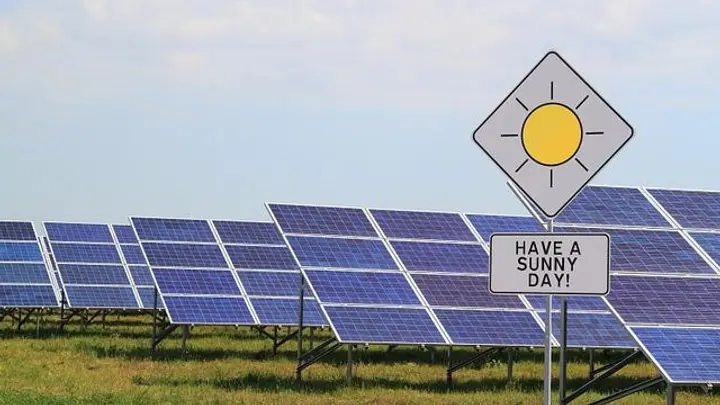
A commentary published by CleanTechnica on 25 November 2026 and written by Prof Ray Wills looks at where solar stands in Europe. It draws on SolarPower Europe's September mid-year assessment. The trade body says solar is adding more to energy security and lower bills. Yet weaker policy backing, grid limits and too little flexibility could hold back growth.
SolarPower Europe reported that solar became Europe's largest electricity source in June. It put the value of gas imports that solar displaced at more than 30 billion euros over six months of the Middle East conflict. At that point the association expected EU solar installations to shrink slightly in 2026.
The commentary argues that the challenge is no longer only building panels. It is connecting them, using their output and making participation easier. Ukraine's September auctions show the shift. A 50 MW solar-only auction drew three bids totalling 38.99 MW. A 100 MW solar-plus-storage auction drew 26 bids totalling 385.9 MW. Price ceilings were 0.08 euro per kWh for solar alone and 0.12 euro per kWh for solar with storage. The results are bids, not completed projects. The stronger response to the hybrid auction does not prove that batteries are more profitable.
Physical projects also point the same way. A September report described a 918 MWh battery under construction in Romania and a separate 120 MWh system already commissioned at Teiuș. Bulgaria's Devnya solar plant grew from 5 MWp to 65 MWp and added 60 MW and 165 MWh of storage. The author stresses that storage is only part of the answer. A Schneider Electric Research Institute study, which the author describes as company-sponsored, modelled 40,500 scenarios. Under global-average cost assumptions, the best combinations cut total electricity-system costs by about 10% against the benchmark. Under assumed 2030s technology costs, the cut reached 40%. The figures come from models and do not predict what European households will pay. The author's lesson is coordination: electrifying transport, heating and industry can make infrastructure work harder alongside distributed generation.
Grid access is the next bottleneck. Denmark's October connection reform moves away from first-come, first-served queueing. Projects now sit in categories linked to societal functions, electrification and other uses. Within each category, projects that place less strain on the grid can move ahead. Battery treatment matters. A battery that stands alone is placed in the third tier, behind renewable generation and electrification projects in the second tier. Batteries built alongside generation can qualify for the second tier. The author argues that rules should judge how a system operates, not what technology label it carries. Europe, he says, needs transparent queues, credible tests of project readiness and connection arrangements that reward flexibility.
Solar can also go onto infrastructure that already has another purpose. Roofs, station canopies, car parks and noise barriers all fit this model. Belgium's Solar Tunnel, first announced in 2011, uses 16,000 modules over a covered rail section near Antwerp. It was designed to produce 3.3 GWh a year for railway infrastructure and trains. At Uden in the Netherlands, bifacial panels form part of an A50 motorway noise barrier. The EU LIFE project measured 325.5 MWh over 18 months, which is roughly 220 MWh a year. The assessment also found lower output and higher capital costs than expected. Multifunctional infrastructure is promising, but it is not automatically cheaper.
At the small end of the scale, plug-in solar lowers the entry barrier. Germany's Federal Network Agency offers a simplified route for qualifying systems with modules up to 2,000 Wp and inverter output up to 800 VA. Registration is still mandatory. Separate notification to the network operator is waived under set conditions, including an arrangement where exported power is not paid for. Technical and installation-safety rules still apply. Germany's environment agency says qualifying devices within technical limits can be set up by non-specialists. This may suit people without a conventional rooftop, including some flat residents. The commentary is clear that such systems do not replace large-scale generation. They also do not remove electrical-safety, mounting or building-consent requirements.
The author closes by listing what Europe needs: large projects, distributed generation, solar on infrastructure, accessible household systems, batteries and flexible demand. He also draws a parallel with Australia, where rooftop solar is reshaping daytime demand and electricity prices. The response there, he says, is batteries, flexible demand and market rules that reward them. The piece is an opinion column, so its conclusions are the author's own. Practical rules, he concludes, are how ambition becomes real deployment.
Enjoying this? Get the Energy brief
Every Friday: prices, subsidies and what changed in your market.
✓ Free · seven editions · one click to leave
Original reporting by the sources above. Summary by smart-home.space.