EnergyNews wire, 2 h ago
Germany's solar output passes 100 TWh for the first time in 2026
Reported by pv magazine
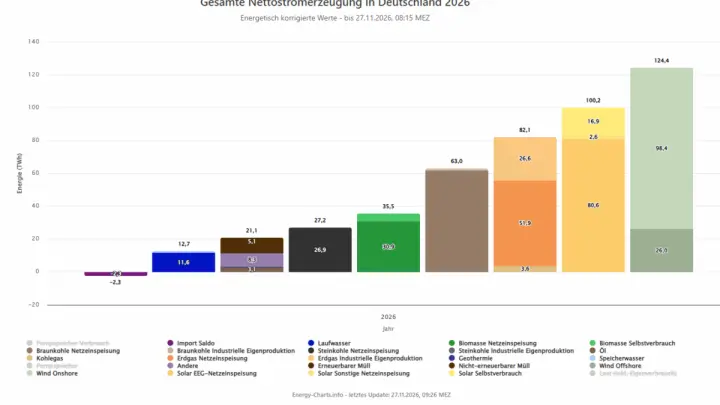
Photovoltaic systems in Germany generated more than 100 terawatt-hours of electricity in 2026, the first time the country has crossed that level in a single calendar year. The figure comes from Fraunhofer ISE, the solar research institute, using its Energy-Charts platform. The data show 100.2 TWh by the morning of 27 November.
The total splits into three parts. About 80.6 TWh was fed into the grid by systems under the Renewable Energy Sources Act, and 2.6 TWh came from other systems feeding the grid. The remaining 16.9 TWh was used directly on site by the system owners, known as self-consumption. Solar is now Germany's second-largest source of net power this year, behind wind at 124.4 TWh. Gas plants produced 82.1 TWh, and coal plants together produced less than solar.
The growth is steady. Output is up by about 10 TWh on 2025, when Energy-Charts recorded 90 TWh. A decade ago, in 2016, solar generated 36.8 TWh, so today's figure is nearly three times higher. The mix then looked very different. Lignite and hard coal were far larger sources, and biomass also outproduced solar.
The trade group BSB, formerly known as BSW, flagged in mid-November that the target was within reach, using the same institute's data. The report does not say what the milestone means for consumer prices or grid rules, so those effects remain unknown. The figures also cover the year only up to late November, so the final full-year total is still to be confirmed.
Enjoying this? Get the Energy brief
Every Friday: prices, subsidies and what changed in your market.
✓ Free · seven editions · one click to leave
Original reporting by the sources above. Summary by smart-home.space.