EnergyNews wire, 8 h ago
Plug-in solar: what the UL 3700 safety standard does and does not cover
Reported by CleanTechnica
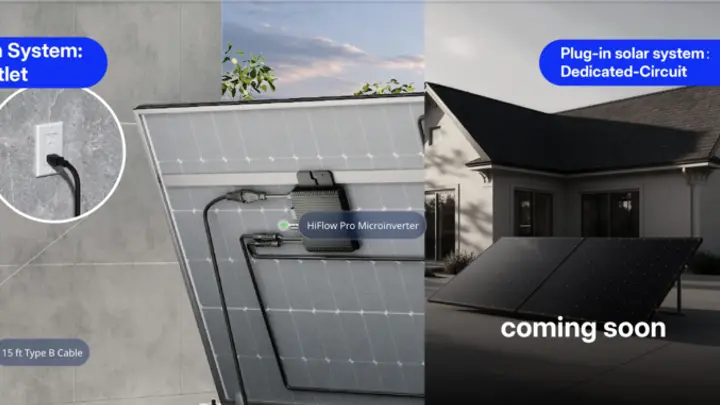
Plug-in solar, also called balcony solar or plug-in PV, lets renters, apartment residents and condo owners add panels without a roof project. The panels connect through a microinverter to an ordinary wall outlet. In a growing number of states no utility interconnection application is needed, but rules differ by state and buyers should check local law first, according to the CleanTechnica report.
A new safety standard, UL 3700, covers these interactive plug-in systems. The Outline of Investigation was published in December 2025, and UL Solutions began certifying products to it in January 2026. It addresses four risks: plug prongs that stay live after unplugging, anti-islanding when the grid fails, compatibility with GFCI outlets when power flows in both directions, and breaker masking, where solar can hide an overload from the breaker.
Laws are moving alongside the standard. The source counts ten states with plug-in solar laws as of mid-October, including Utah, Maine, Virginia, Colorado, Maryland, New Hampshire, Connecticut, Vermont, New Jersey and California. Several of these laws take effect in 2027. New York's SUNNY Act was still waiting for the governor's signature. Some laws require a recognized safety standard, and some name UL 3700 directly.
The key point for buyers is the difference between a certified component and a certified system. UL 3700 assesses the whole setup: the microinverter, how it connects, its accessories and the overall configuration. Compliance for one part does not certify the full kit.
Hoymiles' HiFlow Pro shows this gap. The company describes the microinverter as UL 3700-compliant, and it was widely reported as the first plug-in microinverter in the US to reach that status after its July 15, 2026 launch. The complete HiFlow Pro system has not finished certification. Hoymiles expects that process to end in December 2026. The company also says the unit shuts down in 135 milliseconds when unplugged or when the grid fails. Maine's law requires shutoff within 0.2 seconds.
According to Hoymiles, the HiFlow Pro comes in models from 360 W to 500 W. Up to four units can be connected, each on its own outlet, with a combined limit set by state and local rules. The listed peak efficiency is 95.5%. The enclosure is NEMA Type 6, the operating range is -40°F to 149°F, and the standard warranty is 12 years. Monitoring runs through the S-Miles Home app. Panels are bought separately or in a kit.
The savings estimates come with conditions. Hoymiles estimates up to 721 kWh a year from one 360 W unit, based on 5.6 peak sun hours a day, and about 2,403 kWh from four units. At 38 cents per kWh, the company estimates up to about $247 per unit a year and a payback of roughly two years. The source notes that this assumes about 90% of the power is used inside the home. EnergySage puts typical kit savings at $13 to $20 a month at the national average rate of about 18 cents per kWh, and $40 to $50 a month in high-rate states such as California, New York and Hawaii. The federal homeowner solar tax credit ended on December 31, 2025, so payback estimates should not assume it.
Several limits apply. The system lowers the bill but does not replace the grid and gives no backup power in an outage. Surplus power may flow to the grid without credit unless the utility offers net metering. Hawaii is not among the ten states with a law. Even where laws exist, utilities may ask for notice, and landlord and HOA rules differ. Prices and configurations vary by retailer, so check the current listing before buying.
Enjoying this? Get the Energy brief
Every Friday: prices, subsidies and what changed in your market.
✓ Free · seven editions · one click to leave
Original reporting by the sources above. Summary by smart-home.space.