EnergyNews wire, Yesterday
Home solar and batteries could cut global power system costs by up to 40% in 2030s
Reported by pv magazine, pv magazine USA
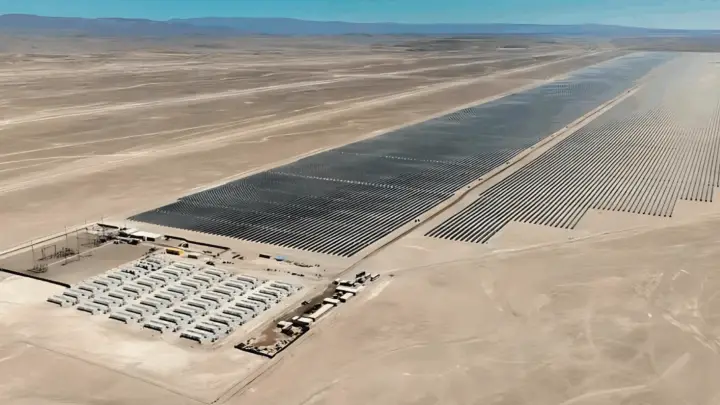
The Schneider Electric Research Institute (SERI) says that coordinated growth in distributed solar, batteries and electrified demand could cut total global electricity system costs by up to 40% in the 2030s. The savings depend on installation costs falling as projected and on demand growing at the same time. Both pv magazine editions report the same study.
The study, a new baseline for the power economy, tests 40,500 scenarios that mix solar generation, battery systems and grid infrastructure. Its model counts the running costs of home and business systems, plus the fixed and variable costs of central plants, transmission and distribution networks.
At current global average installation costs, the lowest modeled system cost is $0.145 per kWh, against a baseline of $0.160 per kWh, a cut of about 10%. With projected 2030s costs, the minimum falls to $0.094 per kWh, about 40% below the baseline. Savings could add up to 0.8% to global GDP in the 2030s, compared with about 0.1% under current costs.
Results differ by market. In the United States, residential solar installation costs are about three times the global average. There, the minimum modeled cost rises to $0.191 per kWh, roughly 20% above the baseline. The study also finds that adding solar and storage alone does not lower costs. Other sectors must electrify at the same pace.
Two mechanisms drive the savings. First, local solar replaces power bought from the grid, and in many markets distributed resources already cost less than central supply. Second, batteries cut peak demand and smooth load profiles, freeing grid capacity. New loads such as electric vehicles, heat pumps, air conditioners and data centers can then spread fixed network costs over more sales.
The study estimates that distributed resources could supply more than 7,500 TWh today, about 30% of global demand, and up to 25,000 TWh by 2050.
Timing matters. In one pathway, demand grows before distributed resources expand, so new peaks need grid upgrades and extra plants. Costs reach about $0.173 per kWh in 2035. In another, solar and batteries come first, leaving capacity idle. Costs rise to about $0.168 per kWh around 2030, and the benefits arrive later. In a third pathway, generation, batteries and demand grow together. Costs peak at a lower $0.163 per kWh and fall to about $0.105 per kWh by 2050.
Battery sizing is critical. A mismatch in storage durations can add up to 35% to costs above the baseline, even at global average prices. Households, commercial buildings and factories that size systems to cut their own bills come close to the system-wide optimum, within $0.002 per kWh under 2030s costs. Offices have the lowest totals because their peak use matches solar output.
SERI sets three priorities. The first is to smooth demand through pricing that rewards shifting use, plus incentives for pairing panels with batteries and on-site energy management. The second is to match supply expansion with demand growth, using incentives and building rules that treat the technologies together. The third is to build supply chains through public procurement, manufacturing incentives, faster permits and installer training. SERI says this could also support energy security and competitiveness.
Several points remain open. The figures come from modeled scenarios, not measured results, and the savings depend on coordinated operation and on new electric loads arriving on time. The US edition of the article was cut off before its end, so any later details are not covered here.
Enjoying this? Get the Energy brief
Every Friday: prices, subsidies and what changed in your market.
✓ Free · seven editions · one click to leave
How each source covered it
Original reporting by the sources above. Summary by smart-home.space.