EV & MobilityNews wire, Yesterday
A 100W USB-C charger in the 12V socket: what it means for your car
Reported by XDA Developers
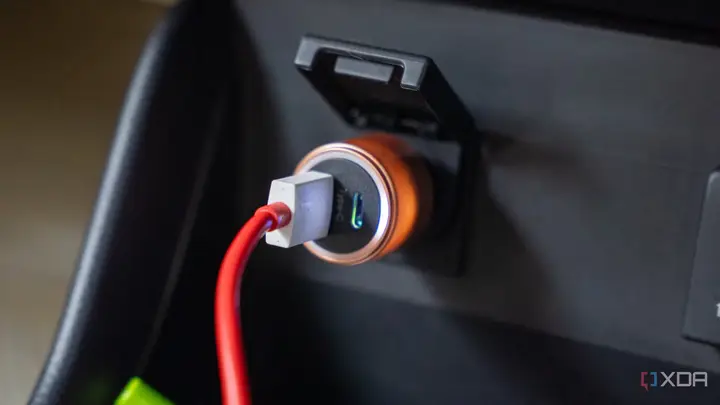
A writer for XDA Developers reports that a 100W USB-C charger plugged into a car's 12V socket replaced the slow built-in USB ports in their vehicle. The change was driven by changing needs. Phones now draw more power, and the built-in ports could not keep up while navigation and music ran through Android Auto.
According to the reviewer, most built-in car USB ports are designed for basic charging and give relatively low output. They may keep a phone topped up during a short commute. They are not suited to charging a laptop. The author's car is not new, and the reviewer says its ports are mainly meant for smaller devices.
The 12V socket is the workaround. A dedicated converter takes power from the car's electrical system and outputs modern USB standards. A charger that supports USB Power Delivery can agree the right voltage and current with the connected device, so it can supply far more power than a standard port. The reviewer says real-world speed is set by four things: the socket's rating, the charger, the cable and the device.
In daily use, the author charges a phone, wireless headphones and power banks. The reviewer has also plugged in a MacBook to charge its battery on several occasions. That removes the need to carry a wall adapter on a day out. A forgotten power bank can be topped up at full speed from the same socket.
The reviewer adds that a phone running Android Auto, maps, mobile data and Bluetooth streaming at once can run hot. The socket adapter kept pace where the built-in port did not. The author previously used a 60W model before moving to the current 100W unit. The reviewer notes that faster options also exist for users who need more power.
The article gives buying advice. The reviewer names USB-C Power Delivery support as the most important feature. A charger should have at least two USB-C ports, so a phone and one more accessory can connect at once. A third port may help if the car also runs a dash cam that stays plugged in. Multi-port units usually allow only one port to reach top speed, although each port still outputs more than a standard car USB port.
The article also gives one example, the AINOPE car charger. According to the text, it delivers up to 36W through QC 3.0 to compatible devices. Its USB-C port supports Power Delivery up to 36W. It comes in three colours and has a pull ring that eases removal from the socket. The article does not give a full price range for this model.
What is still unknown: the report is a personal account from one car and one charger. It does not include test results or charging times across different vehicles. It does not show how specific car models rate their 12V sockets. Readers should check their own socket rating, cable and device before buying.
Enjoying this? Get the EV & Mobility brief
Every Wednesday: charging, cars and costs.
✓ Free · seven editions · one click to leave
Original reporting by the sources above. Summary by smart-home.space.