EV & MobilityNews wire, 2 h ago
Hyundai Ioniq 9 second test: better efficiency and a design that grows on you
Reported by Tom's Guide
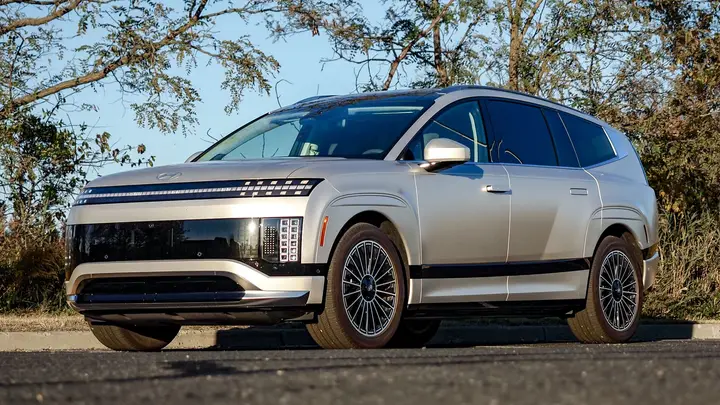
Tom's Guide has published a second road test of the Hyundai Ioniq 9, a three-row electric SUV. The reviewer drove the Calligraphy Design trim for another week this year, after a first test in which the styling was criticised. After more time behind the wheel, the reviewer says the car looks better than first expected, although the rear end is still hard to accept. The verdict is positive: a practical family vehicle with strong efficiency and comfort. The report reflects one reviewer's experience. It does not describe a new launch or a change to the car.
Efficiency is the main finding. Over 130.5 miles of mixed driving, the reviewer recorded an average of 3.3 miles per kWh. The first test last year gave an average of about 3 mi/kWh. In city driving, the car reached a peak of 4.5 mi/kWh, up from a previous best of 3.8 mi/kWh. The reviewer notes that efficiency usually drops over time, so the improvement stands out. For this trim, the EPA estimates a range of 311 miles. Using the measured 3.3 mi/kWh, the reviewer estimates a real-world range closer to 363 miles. These are one person's readings on one set of routes, not lab results.
The styling remains the most debated point. The reviewer describes the design as an odd mix of a curved front bumper and a tapered, upright rear. The front, with a pixel-style LED light bar across the nose, is praised for its road presence, especially after dark. The rear is still described as the hardest part to accept, with a shape that looks a little like a boat tail. The reviewer now accepts that this rear shape helps aerodynamics and so supports the efficiency figures.
Inside, the report praises the front seats. The driver's seat has a function that slowly changes the cushion firmness, which the reviewer says helps reduce fatigue on longer drives. The second-row captain's chairs offer heating, ventilation, power reclining and extendable footrests. The third row is the weak point. The reviewer says legroom is practically nonexistent for adults, so the rear bench is usually kept folded to give more luggage space. Other features mentioned include adaptive cruise control with lane centring, a head-up display, a blind-spot camera feed shown in the gauge cluster, a digital rearview mirror, rear sunshades, a panoramic sunroof, ambient lighting and a 120V outlet in the boot.
The tested car costs nearly $80,000 with its options, which makes it one of the most expensive vehicles in the Hyundai range. The reviewer says the price had made them sceptical, but a second week changed that view. The article does not give a launch date, wider availability or a price range beyond this tested figure. It also does not give further detail on how the efficiency figures were measured. Readers should treat the numbers as one reviewer's results and check current specifications before deciding.
Enjoying this? Get the EV & Mobility brief
Every Wednesday: charging, cars and costs.
✓ Free · seven editions · one click to leave
Original reporting by the sources above. Summary by smart-home.space.