EV & MobilityNews wire, Yesterday
Lucid admits it lost car orders because it could not track its inventory
Reported by Electrek, Engadget
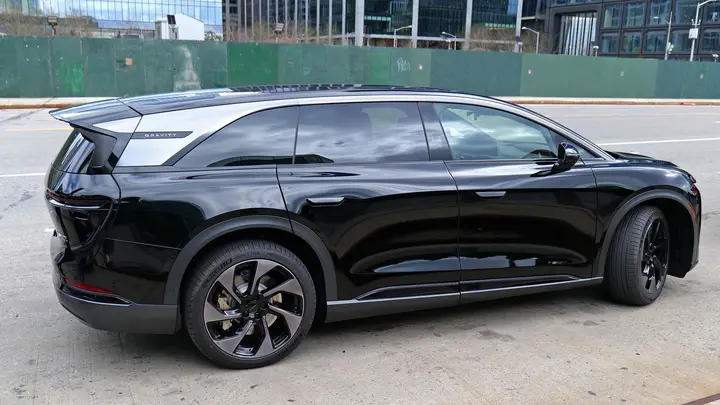
Lucid chief executive Silvio Napoli has admitted that the luxury EV maker lacked a clear view of its own cars for part of this year. Speaking on the third-quarter earnings call, he said that as recently as this summer the company did not reliably know where vehicles were. Buyers placed orders, but Lucid sometimes needed up to two weeks to locate and deliver a car, and some orders were lost as a result. Electrek and Engadget both reported the remarks.
Napoli made the comments after an analyst asked whether deliveries would rise or fall in the fourth quarter. He said that at the start of the third quarter, the company sometimes needed about two weeks to get a car to a customer, and orders were lost during that gap.
Lucid now says it can see which cars are in production, where they are shipped and stored, and when each one can reach a buyer. A new commercial team sells only the cars the company knows will be ready on the day a customer wants one. Engadget reports that Napoli expects this to help sales, in a similar way to Tesla's logistics changes in 2018. The company also expects better conditions in the second half of 2026, which Engadget links to a growing US EV market driven by high petrol prices and a recent deal with the robotaxi company Bolt.
The inventory figures show the scale of the problem. Lucid built 3,228 more vehicles than it delivered in the first half of 2026. In the first quarter alone, it built 5,500 cars but delivered 3,093. Electrek reports that inventory on the balance sheet reached $1.38 billion at the end of June, and that Lucid had earlier in the year been forced to adjust production after a high first-quarter inventory build.
In the third quarter, Lucid built 2,954 vehicles and delivered 3,806, down 7% year over year. According to new CFO Alexander De Bock, finished goods inventory fell by almost 15% during the quarter. Inventory still stood at $1.22 billion on 30 September, according to both outlets.
The quarter was also costly. Engadget reports a loss of $831 million on revenue of $350 million, and says the cost of making each vehicle is higher than its selling price. Its main investor, the Saudi Public Investment Fund (PIF), is putting in an additional $1.75 billion, the outlet says. Engadget also notes that quality control and customer service complaints remain open problems that a better logistics system does not address.
Electrek draws a parallel with Tesla. In 2018, Tesla struggled to move Model 3s from the factory to customers, and Musk then described a lack of trailers for carrying cars. Tesla responded by building its own car carriers, buying trucking companies, moving cars by truck instead of rail, and offering door-to-door delivery. Tesla delivered 83,500 vehicles in the third quarter of 2018, including 55,840 Model 3s.
Several points remain unclear. The reports do not give a forecast for Lucid's fourth-quarter deliveries, do not say how long the new tracking system has been running, and do not name the markets it covers. They also give no timetable for reducing the inventory that was still on the books at the end of September.
Enjoying this? Get the EV & Mobility brief
Every Wednesday: charging, cars and costs.
✓ Free · seven editions · one click to leave
How each source covered it
Original reporting by the sources above. Summary by smart-home.space.