EV & MobilityNews wire, 16 Nov 2026
Tesla to build Cybercabs at Giga Berlin in a €3 billion plant
Reported by Electrek, TechCrunch, InsideEVs
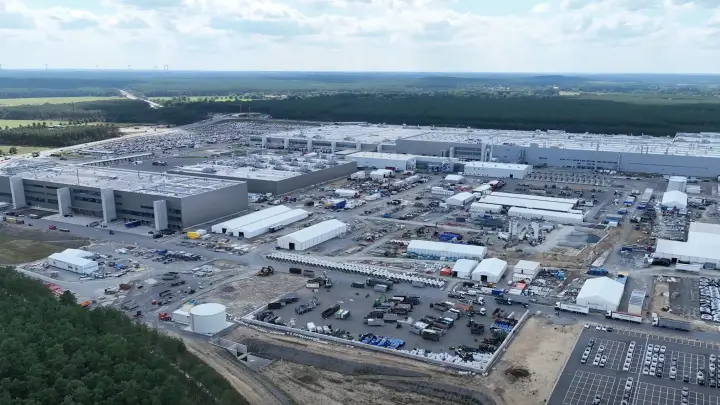
Tesla plans to build the Cybercab in Germany. The company has announced a €3 billion (about $3.3 billion) investment in a new production hall at its Giga Berlin plant in Grünheide, east of Berlin. The building is designed for up to one million Cybercabs a year, with production planned to start in 2029. Plant manager André Thierig announced the decision online, the same day Tesla told staff.
According to Tesla's statement, the money pays for a new hall north of the existing plant, along with ancillary buildings and a second wastewater treatment plant. Tesla plans to file the building application before the end of 2026, begin construction in the first half of 2027 and start production in 2029. The company describes the site as its most advanced factory. Electrek reported that the plan leaked a few hours earlier, when an automation engineer at the plant said Elon Musk had approved it the week before and that the new hall would be bigger than the original factory.
The building plan is not entirely new. Tesla's 2023 permit filings already set out a goal of one million vehicles a year at Giga Berlin, and the company has been clearing land since. What is new is the product. Until now, Tesla had only said that the second hall would not be another Model Y line. Giga Berlin still builds only the Model Y. Electrek also reports that Tesla is adding a battery cell line using the 4680 format, with 18 GWh of annual capacity planned.
Electrek notes that Tesla promised 500,000 units a year when the plant opened in 2022. Even at the 7,500 cars a week the plant is now aiming for, it would fall short of that figure, according to Electrek. The outlet also says Tesla has been hiring again this year as European demand recovered. Electrek links the expansion to Musk's warnings to workers before the March works council election, when he criticised the influence of IG Metall. TechCrunch frames the project as part of Tesla's shift toward AI and robotics rather than being just a carmaker.
The main obstacle is regulation. Under current EU rules, a driverless vehicle model is capped at 1,500 registrations a year across the bloc under a small-series scheme. In March the European Commission lifted that cap for automated valet parking, but robotaxis remain on the small-series track, Electrek reports. Tesla has no European approval for software that drives without supervision. Its supervised system, now called Tesla Assisted Driving, was approved by the Dutch regulator RDW and is recognised in nine other countries, but it still needs an attentive driver. The Cybercab has no steering wheel or pedals, so it would need a level 4 approval. Electrek says Tesla is not running Level 4 testing in Europe. Electrek adds that the Commission has said it wants large-series approval for other driverless uses, and that a UN regulation for automated driving systems is in preparation.
In the United States, TechCrunch reports that federal regulators are investigating Tesla's self-certification of the Cybercab. The vehicle lacks equipment that some federal safety standards require. The sources disagree on the fleet size. Electrek cites 463 Cybercabs registered in Texas as of late October, with production there starting in April. TechCrunch reports about 573 on roads in Austin and soon Dallas, plus about 1,307 Tesla robotaxis registered in Texas, most of them modified Model Y cars. TechCrunch also says the Cybercabs had no major incidents in more than two months of operation. Electrek's own analysis of crash data estimates one crash every 57,000 miles, which it calls roughly nine times the human baseline. Electrek also notes that Tesla reported 22 incidents to NHTSA by July. Personal orders are now open at $29,990, with a required $299 monthly fee usable only within Robotaxi service areas.
TechCrunch notes that Tesla plans to end Cybertruck production next year, partly to free space at its Austin plant for Cybercab output.
Several points remain open. Tesla has not said which approvals it expects by 2029, or whether Berlin-built Cybercabs would be sold in Europe. Electrek argues that exporting from Berlin would only make sense for a robotaxi business many times larger than today's. The sources do not give a date for when European rules might allow driverless sales.
Enjoying this? Get the EV & Mobility brief
Every Wednesday: charging, cars and costs.
✓ Free · seven editions · one click to leave
How each source covered it
- ElectrekFocuses on EU approval rules, the plant's hiring and output history, and skepticism about Tesla's driverless safety record.16 Nov 2026
- TechCrunchFocuses on the Cybercab roadmap and Tesla's shift toward AI and robotics, with US fleet numbers and the federal investigation.16 Nov 2026
- InsideEVsFrames the plan as an autonomy bet taken overseas while Tesla trims its conventional car lineup.16 Nov 2026
Original reporting by the sources above. Summary by smart-home.space.