GadgetsNews wire, 5 h ago
Asus ProArt P14 with RTX Spark: thin OLED laptop, capped power, steep price
Reported by Tom's Guide
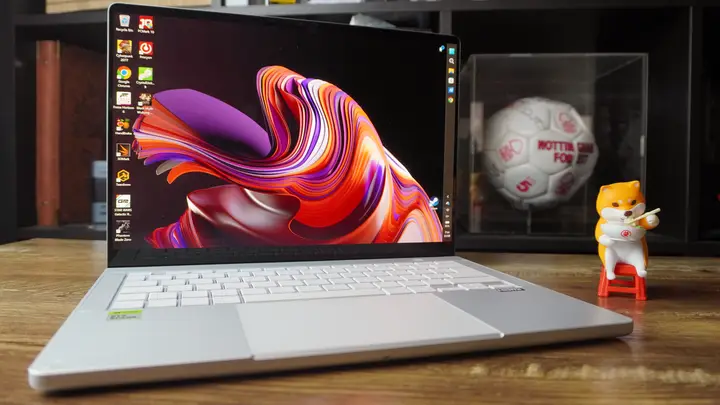
Asus has released a 14-inch laptop built on Nvidia's RTX Spark chip, aimed at creators and developers who want to run AI tasks on the device itself. The model is the ProArt P14, model number H7407. According to a hands-on review published by Tom's Guide on 23 November 2026, it is the lightest 14-inch ProArt Asus has made, at about 0.55 inches thick and 3.26 pounds. The reviewer's verdict is that it comes close to being the best RTX Spark laptop they have tested, but its trade-offs hold it back.
The screen is a 14-inch 3K OLED touchscreen with a 120Hz refresh rate and wide colour coverage. The reviewer found it bright enough to read outdoors, good for photo and video editing, and smooth for games. The laptop keeps a full set of ports: three USB4 ports, one HDMI 2.1 port, one USB-A 3.2 port, an SD card reader and a 3.5 mm audio jack. The keyboard and touchpad earned praise, and the speakers were described as loud and clear for their size. The battery is 90Wh. In the review's web browsing test it lasted about 12.5 hours, which the reviewer said is enough for a full workday or a long flight.
The main criticism is performance. To keep the slim body cool and the battery life long, Asus limits the chip's power by default. In manual mode the limit can be raised to an 80-watt TDP. The larger ProArt P16 can go up to 135 watts. The reviewer said that when the P14 is compared with bigger RTX Spark machines, its performance ceiling is noticeably lower. It is still fast enough for creative work and local AI tasks. Raising the power also reduces battery life, because the review's battery figure reflects the default out-of-the-box settings.
The review compared the laptop with other RTX Spark systems, including the Microsoft Surface Laptop Ultra and the Lenovo Yoga Pro 9n, and with AMD-based machines such as the Asus ProArt PX13. In the battery test, the P14 edged ahead of several other RTX Spark systems. The reviewer also praised its build and ports, saying Asus kept the full creator toolkit in a body that does not feel heavy to carry.
Heat is the second problem. The underside gets hot under load. The large exposed bottom vents make the laptop uncomfortable to use on a lap, according to the review. The reviewer said the chip still generates serious heat in the slim chassis even with power held back. Buyers who work with the machine on their lap should expect this.
Price is the third issue, and the review gives conflicting figures. The excerpt and the pros-and-cons list give $3,699 and £3,199.99. The body text and the cheat sheet give $3,099 and £3,199 for the 32GB and 1TB model the reviewer tested. The cheat sheet says the lower-end model starts at $2,699, or £2,699. Because the sources within this review disagree, readers should check the current price before they buy.
The reviewer says the P14 suits video editors, designers and AI developers who want CUDA acceleration in a compact body and who accept lower peak performance. People who need the most speed should look at a larger chassis. The review does not give a release date or say how availability differs by region. It also does not give a full set of benchmark results beyond the battery test and the performance comparisons described above.
Enjoying this? Get the Gadgets brief
Every Monday: the gadgets worth your money.
✓ Free · seven editions · one click to leave
Original reporting by the sources above. Summary by smart-home.space.