GadgetsNews wire, Yesterday
RayNeo GT Max AR glasses: 307-inch virtual display and 59-degree view
Reported by How-To Geek
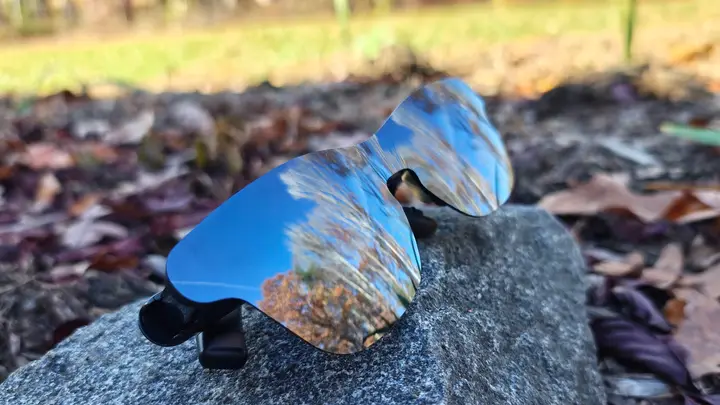
RayNeo has released the GT Max AR glasses, part of its GT series that also includes the cheaper GT. A review by How-To Geek, published on 25 November 2026, tested the GT Max together with RayNeo's Pocket TV Pro. The reviewer says the glasses are among the best-looking display glasses he has used, and that they are easy to recommend, although RayNeo has not fully closed the gap with XREAL.
According to the review, the GT Max is not a successor to the Air 3S. The newer Air 4 Pro carries that line. The GT costs $330, and the GT Max costs $100 more. Both are sold directly by RayNeo, Amazon and Best Buy. The review does not describe any other retail channels.
The GT Max uses two micro-OLED panels with a resolution of 1920 x 1080 each. Its virtual display can reach up to 307 inches, with a 59-degree field of view. The non-Max GT tops out at 231 inches and 46 degrees. The refresh rate goes up to 120Hz for 2D content and 60Hz for 3D. The reviewer notes that the largest setting is so big that the whole picture cannot be seen at once. He says the wider field of view is the main reason to pay the extra money. The display can be shrunk on the GT Max, but the cheaper model cannot offer a wider field of view.
The glasses use 3DoF tracking. A window stays placed relative to the wearer's head, but it does not stay fixed in one room when the wearer walks into another. There are three placement modes. Follow keeps the screen directly in front of the eyes at all times. Steady does the same, but the screen moves more gradually, which the reviewer found less jerky. Pinned keeps the screen in one location, as a real monitor would. The reviewer found Steady comfortable for hours of video. On his older XREAL Air 2 Pro, he had only Follow, and that was not comfortable for him.
The built-in menu uses a button and a volume rocker. The glasses include spatial sound with four speakers, developed with Bang & Olufsen. The design is large and the glasses sit away from the eyes. A wire runs from the right stem to the connected device. The reviewer liked the carrying case, which is smaller than XREAL's and stores the USB cable better.
The main drawback is the lack of electrochromic dimming, which the XREAL One Pro offers. Without it, the glasses are harder to use near windows and in bright rooms. The reviewer advises against using them outdoors on a sunny day. The glasses also have no input method of their own. The experience depends on the software on the connected phone or PC. The reviewer described Samsung DeX as awkward for watching Jellyfin. He said Android XR is better, but pinching and tapping in the air can still be awkward.
RayNeo also sent a Pocket TV Pro, which the review calls a follow-up to the earlier Pocket TV. It is roughly the size of a TV remote and runs Google TV. The Google TV interface is shown on a flat virtual display, without changes for AR. The device boots quickly, and its controls are close to those of a Google TV remote. The reviewer says that paired with the GT Max, he would choose this setup over more expensive VR headsets.
Several points are still unknown from this source. The review does not give a price or release date for the Pocket TV Pro. It does not give battery life or weight for the GT Max. The article is a single hands-on review, and no independent lab results are given. Readers should check RayNeo or the retailers for current prices and stock before deciding.
Enjoying this? Get the Gadgets brief
Every Monday: the gadgets worth your money.
✓ Free · seven editions · one click to leave
Original reporting by the sources above. Summary by smart-home.space.