GadgetsNews wire, 23 Nov 2026
Apple's iPhone 18 Pro uses a larger vapor chamber to keep performance steady
Reported by TechRadar
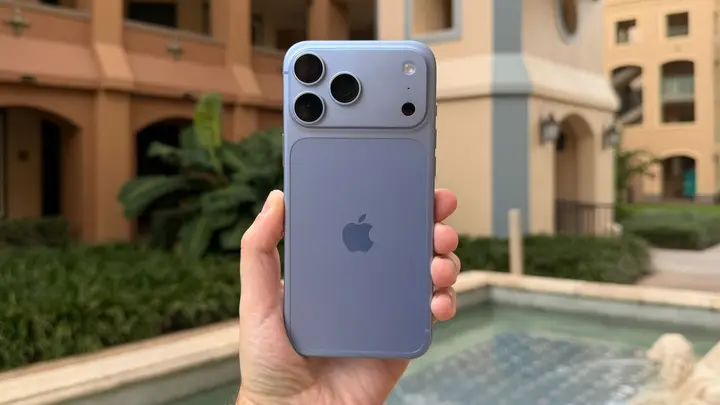
Apple has put a sealed vapor chamber into its Pro iPhones, and the iPhone 18 Pro continues that approach. The chamber is a thin metal pocket holding a small amount of water. Near the hot chip, the water evaporates, carries heat across the chamber, and condenses back into liquid once the heat reaches the phone's aluminum body. TechRadar notes that the same principle has cooled laptops for decades.
Apple described the part in its launch material. The company says deionized water is sealed inside and that the chamber is laser-welded into the aluminum frame. With the iPhone 17 Pro, the Pro line also moved from titanium to an aerospace-grade aluminum unibody, which Apple called its best thermal design so far. The report gives two baselines for the sustained performance claim: the iPhone 16 Pro in one place and the iPhone 17 Pro in another. The comparison point is therefore unclear, and the sources contain no independent test.
The iPhone 18 Pro, announced on September 9, 2026, uses a redesigned chamber with three times the surface area of last year's model, according to the report. Apple also moved the memory away from the area under the A20 Pro chip, so the processor touches the chamber directly. Apple claims the combination gives up to 40 percent better sustained performance. A phone that stays cool can keep its top speed longer during long gaming sessions or on-device AI tasks, instead of slowing down.
Apple was not first. Samsung placed a heat pipe, a narrower relative of the vapor chamber, inside the Galaxy S7 in 2016. High-end Galaxy and Pixel phones now use vapor chambers of their own. The ultra-thin iPhone Air still has none. TechRadar reports that Stanford researcher Kenneth Goodson expects vapor chambers to become an industry standard over time.
Building one is hard. The chamber must be perfectly sealed. Some designs mix other materials into the water so it does not freeze and crack the seal, according to Victor Chiriac, CEO of Global Cooling Technology Group. Goodson told IEEE Spectrum that a vapor chamber loses performance compared with plain copper when it is made thinner, and researchers are still working on this. The thinner phones become, the less room there is for the system to work.
What is still unknown: the sources do not show how the chamber performs in independent tests, or how far the 40 percent figure holds in everyday use. The reporting does not cover prices, regional availability or repair costs. It also does not say whether other iPhone models will get the same design.
Enjoying this? Get the Gadgets brief
Every Monday: the gadgets worth your money.
✓ Free · seven editions · one click to leave
Original reporting by the sources above. Summary by smart-home.space.