GadgetsNews wire, 13 h ago
Xreal Aura AR glasses review: sharp screens, a wired puck and clumsy controls
Reported by CNET, Wired – Gear
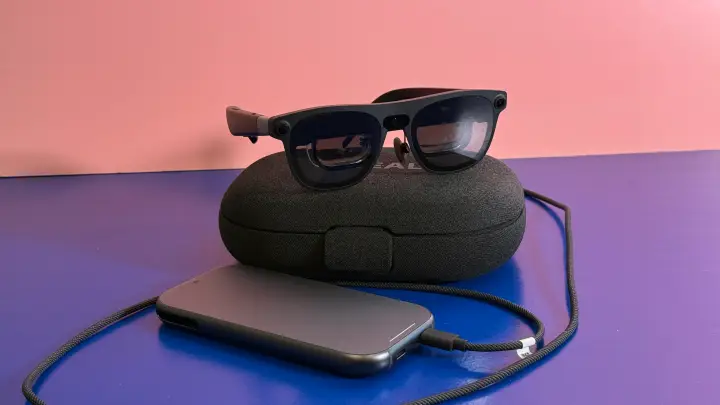
Xreal has released the Aura, a pair of extended-reality glasses that runs Google's Android XR platform. CNET and Wired both tested the device. The sources give the price as $1,279 for the model with 256GB of storage and 12GB of memory. A 512GB model with 16GB of memory costs $1,499. Both versions are on sale until the end of the year, at $1,099 and $1,299. The storage cannot be expanded, as there is no microSD slot. The reviews also differ on the memory figures: Wired lists 12GB or 16GB options, which matches the memory numbers in CNET's review.
The Aura is a wired device. A cable runs from the glasses to a processor puck about the size of a smartphone, weighing a little over half a pound. Wired says the puck's battery keeps the glasses going for about four to five hours of constant use. CNET reports that the battery lasts longer than most VR headsets. Wired puts the glasses at 95 grams. CNET says the puck can get hot, and Wired says the glasses warm up after a few minutes and leave marks on the nose.
The screens are the strongest part of the design. Each eye gets a micro OLED display at 1920 x 1200 pixels, with a 70-degree field of view and a refresh rate of up to 120Hz. Both reviewers describe the picture as bright and sharp, good for films, games and virtual monitors. The field of view is still narrower than in VR headsets, which usually offer 90 degrees or more, so the edges of virtual screens are visible. The outer lens can darken for a clearer view or go clear for walking, but Wired found the two-lens layout distracting and the frame chunky. CNET noticed some tearing during YouTube playback and occasional tracking drift.
The puck runs Android XR and can open most Android and Chrome-based apps, according to CNET. Some developers opt out, including Netflix and Disney Plus, though those services can be used in a browser. Some apps do not resize to fill the view. CNET also says the built-in Gemini assistant can see the apps on screen and the room around the wearer. Wired tested the productivity mode. Several virtual windows can be placed around the user, and with a Bluetooth keyboard the glasses act as a workstation. Wired wrote almost half of its review while using them as its screen, then switched back to a desktop to rest its eyes.
Controls are the weakest point in both reviews. Input relies on hand tracking and a trackpad on the puck. CNET says hand tracking works but often feels limiting and awkward. Wired says the trackpad is smoother than reaching out to the air. The puck has a fingerprint sensor for authentication. Typing needs a separate wireless keyboard, and the glasses are not designed for walking around. Wired praised the audio from a four-microphone array with Bose EQ tuning, and says wireless headphones can also be connected.
Both reviews place the Aura between VR headsets and smart glasses. CNET calls it an experimental step toward phones working with advanced glasses. Wired says it is closer to a VR headset in a more comfortable frame, and that it will compete with Meta's VR Glasses, due in early 2027. Google and Samsung's first Android XR AI glasses, made with Warby Parker and Gentle Monster, are due in a few weeks, according to CNET. The sources do not say how many apps will be optimised for the Aura, or whether the sale prices will last beyond the end of the year.
Who it suits: people who want a large private screen while travelling, paired with an Android phone or a handheld console. For a home, it is a personal device rather than part of a smart home system. The reviews do not cover long-term durability or battery life on a real trip. Price and app support are the main questions to check before buying.
Enjoying this? Get the Gadgets brief
Every Monday: the gadgets worth your money.
✓ Free · seven editions · one click to leave
How each source covered it
Original reporting by the sources above. Summary by smart-home.space.