EnergyNews wire, 52 min ago
Agrivoltaics with batteries could power rural West Africa, researchers say
Reported by pv magazine
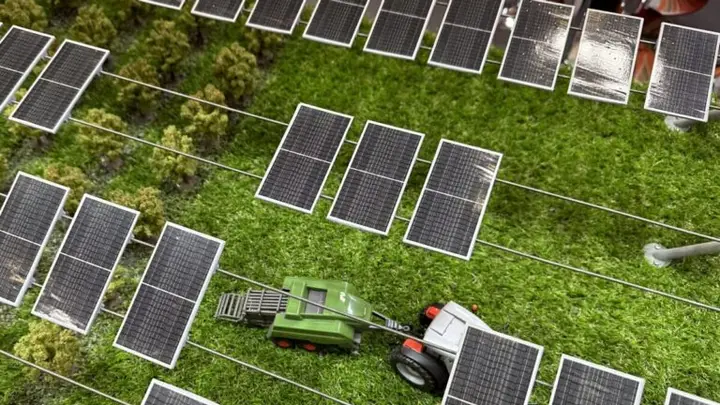
A feature published by pv magazine on 28 November 2026 looks at how agrivoltaics, the practice of running solar generation and farming on the same land, could support rural life in West Africa when paired with batteries. The piece starts from a wider problem: power system managers are finding it harder to absorb solar as the technology spreads quickly.
Solar growth is fast. According to the International Energy Agency, the world reached more than 1,100 GW of cumulative solar capacity in 2022, and only two more years were needed to double it. China accounts for most of the recent expansion, adding more than 357 GW in 2024, which is more than the rest of the world combined. Africa installed 4.5 GW of new solar in 2025, an increase of about 54 per cent on the year before, according to the Global Solar Council. Grid problems and land-use conflicts still slow development. Utility-scale plants favour flat farmland, which adds pressure on food production in areas already losing farmland to urban growth.
Agrivoltaics is presented as a way to avoid that trade-off. The article says crops can be grown under panels without lower yields, and that partial shade may reduce heat stress and cut water use. Electricity can be used on the farm or sold to the grid. Revenue from power on a small plot can be far higher than from farming the same plot alone, and lower water costs add further savings. The authors say this could be a triple win for farmers, developers and the wider rural economy.
A team from Oregon State University visited Nigeria and Ghana in summer 2025 to study adoption. They met government officials, renewable developers, farmers, agribusiness owners and researchers. The technology was well received, but the team found clear policy and socioeconomic barriers in both countries. Suggested steps include context-specific policy and market rules that attract private investment and build social acceptance. The article cites IEA estimates that West Africa has the highest energy poverty rates in sub-Saharan Africa, with rural electrification at about 29 per cent.
The second half covers battery storage. Batteries, usually lithium-ion, nickel-cadmium or lead-acid systems, can store power when it is cheap and plentiful and release it at peak times or during outages. The article says they can steady voltage and power, and can reduce reliance on fossil-fuelled peaker plants. In rural areas they could keep farm work running and give children light to study at night. The article states that the costs of solar and batteries have each fallen by more than 90 per cent over the past decade, which makes pairing them more affordable over time.
What is still unknown: the article does not give project costs, named sites or timelines for pilots, and it does not set out specific policy proposals beyond general directions. Its figures on cost declines and energy poverty come from the cited agencies and the authors, and have not been checked independently here. Readers should treat the piece as a research overview rather than a report on a funded project.
Enjoying this? Get the Energy brief
Every Friday: prices, subsidies and what changed in your market.
✓ Free · seven editions · one click to leave
Original reporting by the sources above. Summary by smart-home.space.