EnergyNews wire, 22 h ago
Solar's next growth depends on grid access and storage as panel and battery prices fall
Reported by pv magazine, pv magazine USA
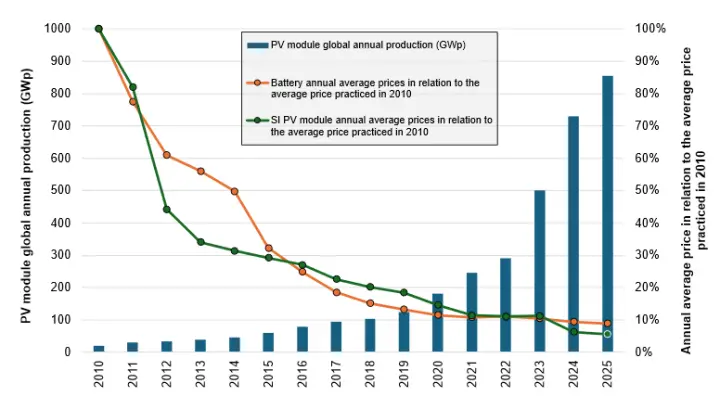
A pv magazine article, published on 27 November 2026 in its global and US editions, covers two trends at once. The first is greenhushing, where companies do useful environmental work but say little about it in public. The second is the falling price of solar panels and batteries, which the author links to a change in where the solar industry's main challenge now lies. The article argues that the next stage of growth will depend more on grid access, system flexibility and long-term operating value than on equipment prices.
Greenhushing is the deliberate choice to play down, conceal or stay silent about green targets, climate pledges and sustainability efforts. It is the opposite of greenwashing, where firms overstate their environmental record. The article says the trend is growing most among US companies, which fear political, legal and financial risks from public statements. It does not necessarily mean less action. Many firms are putting more effort into carrying out measures and less into promoting them. Lower costs for solar photovoltaics and lithium-ion batteries make these measures more attractive, so companies may adopt them while speaking about them less.
The article cites academic research on US listed companies. According to that research, investors may value demonstrated environmental performance above extensive sustainability communication. A wider gap between a company's real performance and its public messages was linked to higher later abnormal stock returns. The article also cites a 2025 survey by The Conference Board. It found that 80% of surveyed sustainability executives were changing their ESG strategies in response to the new US administration.
On the technology side, the article says solar has already won the argument on cost. PV modules now sell for only 5% of their price 15 years ago. Battery prices are 9% of their 2010 level. Solar already runs in utility-scale plants, on rooftops, at businesses and on farms. The open question is value: whether a plant can deliver power predictably, in the right place and at the time the grid needs it. The author describes a shift from scale toward intelligence, meaning generating, storing, managing and delivering power rather than simply installing panels and feeding the grid.
According to the article, the bottleneck has moved to the grid itself. In many regions, the most contested asset is grid connection capacity. Distributed generation raises technical problems, including reverse power flow, substation capacity, power quality, protection systems, metering and grid management. Energy storage, demand response, digitalisation and generation close to where power is used are becoming more important. Customers no longer want only a panel, inverter or battery. They want complete packages covering engineering, software, operations, warranties, financing and expected returns. For households, the article presents solar with storage as a strong option, but its main examples are industrial, commercial and agricultural.
For investors and developers, the article recommends a wider check before a project goes ahead. Grid capacity, curtailment risk, contract terms, capital costs and the value of electricity at different times of the day matter as much as sunshine, permits and equipment prices. The article gives no project-level figures and does not say how quickly grid capacity will be added in any market.
Enjoying this? Get the Energy brief
Every Friday: prices, subsidies and what changed in your market.
✓ Free · seven editions · one click to leave
How each source covered it
Original reporting by the sources above. Summary by smart-home.space.