EnergyNews wire, 24 Nov 2026
Tongwei proposes oversized solar-plus-storage design to raise grid value of PV
Reported by pv magazine
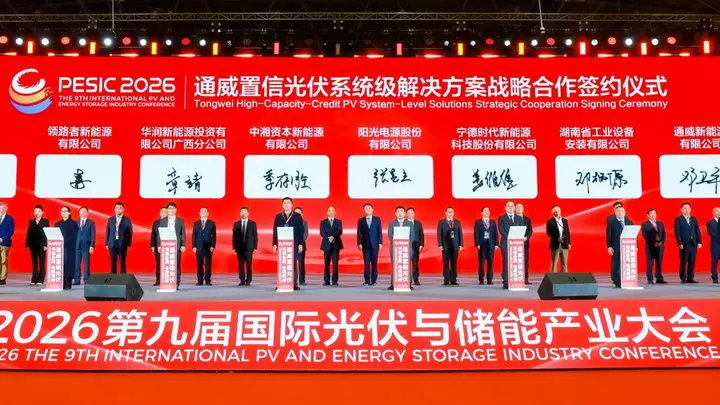
Chinese solar manufacturer Tongwei unveiled a system-level design it calls High-Capacity-Credit PV on 18 November at the ninth International Photovoltaic and Energy Storage Industry Conference in Chengdu, according to pv magazine.
The design raises the DC-side solar capacity of a plant to at least twice its original size while keeping the existing grid connection capacity. A battery stores electricity when solar output is above the plant's export limit. It discharges when solar output falls or when demand rises. The aim is to shift more generation into periods of higher demand.
The concept is built around capacity credit. This measures how much of a plant's installed capacity can reliably support electricity demand at critical times. It differs from capacity factor, which measures total generation over time. Capacity credit is gaining weight in China as the country tries to make variable renewable power more dependable.
Tongwei says suitable projects could reach 3,000 to 4,000 equivalent operating hours a year. Conventional PV plants reach roughly 1,000 to 1,500 hours. The company also claims that retrofits could lift investment returns by more than three percentage points under favourable conditions. These figures are the company's own claims.
Tongwei has not published detailed project economics. It has not disclosed the reference capacity used for the hours calculation, and it has not provided independently verified operating data.
At the launch, Tongwei signed cooperation agreements with battery maker CATL, inverter and storage supplier Sungrow, and several Chinese energy and investment firms. The partners plan to work together on system design, construction, operations and asset securitisation for new solar projects and retrofits. No investment amounts or equipment orders were disclosed.
The announcement comes as China's solar market slows. According to National Energy Administration data, the country added 110.83 GW of PV capacity in the first nine months of 2026. That is a fall of 53.9% from a year earlier. Installations are under pressure from weaker demand, low midday power prices and grid connection limits.
The concept also fits China's 15th Five-Year Plan for renewable energy. That plan sets a target for average dependable capacity contribution of 8% from wind and solar by 2030, including about 6% for PV. Tongwei chairman Liu Hanyuan said wider use of the approach could raise grid connection equipment utilisation two to four times. He added that it could create more demand for modules, batteries and power electronics.
So far this is a company proposal with partners and no confirmed project list in the sources. Readers should treat the performance figures as unverified until independent data appears.
Enjoying this? Get the Energy brief
Every Friday: prices, subsidies and what changed in your market.
✓ Free · seven editions · one click to leave
Original reporting by the sources above. Summary by smart-home.space.