EnergyNews wire, 24 Nov 2026
LiTime Lares K1: a plug-in kitchen battery for fridge backup, reviewed
Reported by CleanTechnica, TechRadar
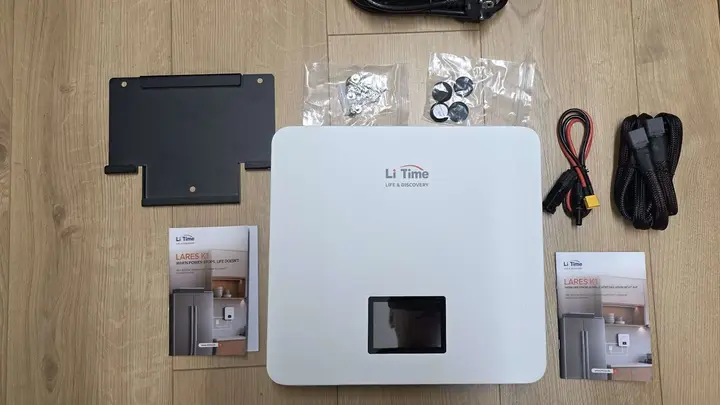
LiTime has launched the Lares K1, a plug-in battery backup for one room, in the United States on 20 October 2026. Instead of covering the whole home, it is meant to keep a kitchen fridge and small appliances running. CleanTechnica reports that the system is a split design: a slim inverter charger and a separate 2,304 Wh LiFePO4 battery rated at 51.2 volts and 45 amp-hours. Up to four batteries can be linked, for a total of 9,216 Wh. LiTime rates the battery for 4,000 cycles and gives a 5-year warranty.
The inverter is rated at 2,000 W continuous, with a one-second surge of 4,000 W, delivered as clean sine-wave AC at 120 V. Adding batteries adds runtime, not power. The unit has two AC outlets, and no USB ports are listed. Wall charging runs at up to 1,500 W and solar at up to 800 W, with combined input capped at 1,500 W. LiTime gives no charge time. CleanTechnica's own division of capacity by wall input gives about 90 minutes, but its FAQ puts the theoretical figure near 1.7 hours. In the reviewer's test, a recharge from the wall took about 3 hours, with 80% back in about 2 hours.
In the CleanTechnica test, a large side-by-side fridge ran for almost 26 hours on one battery. That is a little longer than LiTime's estimate of 24 hours. The unit then shut down cleanly to protect the appliance. The reviewer also ran an air fryer, a coffee maker and the fridge together at about 2,200 W. Large loads such as a microwave or air fryer should run on their own, according to the review. A further battery costs about $800 and adds about 24 hours. The price on LiTime's site is $1,099.99, shown as $100 off. US preorders opened on 20 October, and estimated delivery when the reviewer checked was 24 to 27 November.
TechRadar's reviewer received a unit with European sockets. They needed a UK mains lead and an EU-to-UK adaptor to connect a freezer. The only listing they could find was on LiTime's US storefront, and none of the European LiTime sites they checked mentioned the K1, so regional availability remains unclear. The reviewer praised the steel casings, the retractable battery handles and the wall-mount hardware with its two connection cables. Assembly needed only a Phillips screwdriver. However, the printed manuals leave out the assembly order and start-up sequence, so the reviewer followed LiTime's installation video instead.
Scheduling is the main weak point in the TechRadar test. The app's Peak Saving Mode only allows charging to be scheduled in whole hours, which does not match a 23:30 to 05:30 off-peak window from one energy tariff. The clock is set on the unit, with no phone sync and no automatic daylight-saving change. App settings lack explanations. The app connects over Bluetooth or Wi-Fi. The reviewer charged the battery overnight and ran a small under-counter freezer from it, with the unit switching back to mains at a 20% low-charge threshold. Early app readings showed some draw from the inverter even when the AC load was zero. The reviewer noted that this could matter over time, but did not measure it over a long period.
Still unknown are the long-term battery life, which both reviews describe only from short tests, and the cycle and warranty figures, which come from LiTime. CleanTechnica says that separating the inverter from the battery reduces heat and helps the battery last longer, but it did not measure this. Availability outside the US is also unconfirmed.
Enjoying this? Get the Energy brief
Every Friday: prices, subsidies and what changed in your market.
✓ Free · seven editions · one click to leave
How each source covered it
Original reporting by the sources above. Summary by smart-home.space.