EnergyNews wire, 18 h ago
Vegetation at a large Chinese solar park grew greener within two years of installation
Reported by pv magazine
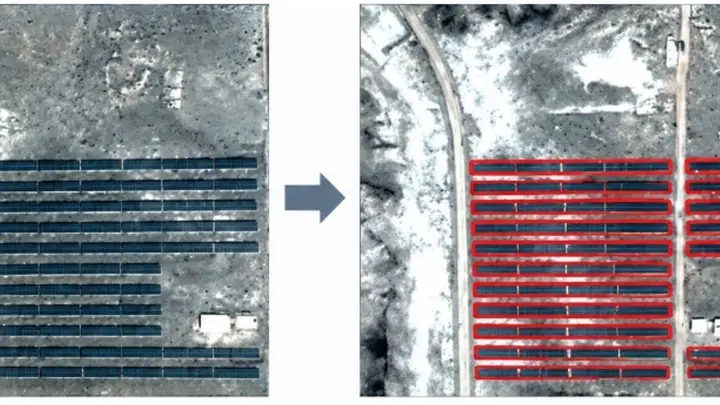
Researchers at Hohai University in China report that vegetation inside the Gonghe Talatan solar cluster in Qinghai province recovered and passed pre-construction levels within two years of panel installation. The site is a 21 GW complex in Gonghe County, at an average elevation of about 2,920 metres. The findings were published in the journal Information Geography, according to the report by pv magazine.
The region is cold and dry, with an average annual temperature of 4.1 C and about 303 mm of rain a year. Almost 88% of that rain falls between May and September. Evaporation is high, at roughly 1,800 mm a year, and the area gets more than 2,900 hours of sunshine. Strong winds move sand across the land.
The team combined high-resolution imagery from Beijing-3 satellites, at 1.2 metre resolution, with Landsat data at 30 metres, covering 2008 to 2025. They measured greenness with the NDVI index, which is based on red and near-infrared light. The researchers mapped the panels by hand and removed panel-covered ground from the analysis. Areas inside each plant were compared with control zones up to 120 metres outside the boundaries.
In the 2025 data, vegetation inside 158 PV plant sites was on average 11.5% greener than in nearby control areas. The gap was largest in August. Landsat results for 2024 to 2026 showed the same pattern in all 12 monthly comparisons, with differences from 3.5% to 10.7%. Compared with pre-construction levels, NDVI was 19.9% higher in the second year and 28.4% higher on average between years two and five. Plants built from 2013 to 2018 showed increases of 14.1% to 35.9%, and older plants generally recovered more.
The researchers suggest that panel shade, lower evaporation, slower wind and changed rainfall distribution may help plants grow. Water from panel cleaning and reseeding may also play a part. These mechanisms were not directly checked. The team warns that climate variation, uncertainty in satellite readings and the absence of ground observations limit the results. They say the findings may not transfer to areas with different environmental conditions.
The work builds on earlier studies. A October 2024 study by Xi'an University of Technology looked at a 1 GW installation at the same park and reported a higher environmental score than surrounding areas. Chinese Academy of Sciences researchers studied eight solar plants in arid regions and found cooling that extended 120 to 540 metres beyond their edges, reaching 3.1 C in some places. Their vegetation responses varied by season, location and plant design.
Enjoying this? Get the Energy brief
Every Friday: prices, subsidies and what changed in your market.
✓ Free · seven editions · one click to leave
Original reporting by the sources above. Summary by smart-home.space.