EV & MobilityNews wire, Yesterday
Volvo's 2028 XC60 and XC90 plug-in hybrids get up to 78 miles of EV range
Reported by Ars Technica, Electrek
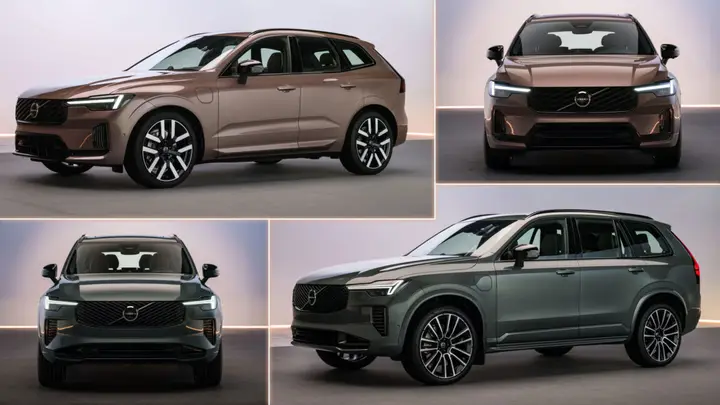
Volvo has updated its XC60 and XC90 plug-in hybrids for model year 2028. Two reviewers drove the cars in Copenhagen and across the bridge into Sweden. Both reports say the models are moving into production, and Volvo expects the first US customers to receive them in the first quarter of 2027. Volvo has not yet said what the cars will cost, and that is the main open question.
The outside changes are small. The XC90 received a new look last year, and the XC60 now gets a similar grille and matrix headlights. Most of the work is under the skin and inside the cabin. Both models use the same plug-in hybrid system, built around a much larger battery.
The battery has a net capacity of 37.9 kWh, or 41.2 kWh gross. In Pure mode, where only the rear electric motor drives the car, Volvo's preliminary EPA estimate is 78 miles for the XC60 and 73 miles for the XC90. Electrek says the XC60 is rated at 590 miles combined range. Hybrid efficiency is estimated at 67 MPGe for the XC60 and 61 MPGe for the XC90.
The powertrain pairs a 247 hp 2.0-litre four-cylinder petrol engine with a 70 hp front electric motor. A 174 hp electric motor drives the rear axle. Combined output is 455 hp and 560 lb-ft of torque. Electrek gives 0 to 60 mph times of 4.5 seconds for the XC60 and 4.9 seconds for the XC90.
Charging is where the reports differ in detail. Ars Technica gives about four hours on a level 2 charger of at least 16 A, and about 27 hours on a 120 V outlet. Electrek reports that the onboard charging rate has doubled from 3.6 kW to 7.2 kW, and says charge times are roughly unchanged. Neither outlet mentions DC fast charging, which the models do not offer.
Both cars are heavier than the models they replace. Ars Technica says they are not performance cars, although the XC60 feels sharper on winding roads. It also says the XC60 transmits more road noise into the cabin, because the XC90 has air suspension that filters it out better. Electrek lists efficiency in electric mode at 48 kWh per 100 miles for the XC60 and 53 kWh per 100 miles for the XC90.
The reviewers also name limits. Electrek says quick acceleration and AWD driving bring the petrol engine in, so winter and spirited driving use more fuel. Because the charger tops out at 7.2 kW and there is no fast charging, longer trips will also need the engine. Ars Technica adds that drivers can use one-pedal driving in B mode, even when the engine is running.
Neither outlet treats its own range figures as a reliable test. Ars Technica says a short drive used about half the battery over roughly 60 km of mixed driving, but the cars were run in hold or charge modes set by Volvo. Electrek reports more than 90 miles of range on a full charge in cold weather, with snow tyres fitted, on the XC60. These are single drives, not measured results.
Inside, both models get a new wood finish, new textiles and new backlighting, along with a new infotainment screen. Electrek says the XC60 has an 11.2-inch touchscreen with Google Gemini built in. The XC90 seats six or seven and offers 34.5 cu ft of cargo space behind the second row and a 5,000 lb towing rating. The XC60 has 21.1 cu ft behind the second row and a 3,500 lb towing rating.
Electrek points out that plug-in hybrids with this much electric range are rare. It compares the Volvos with the Mercedes-Benz GLE 450e, the Toyota RAV4 Prime and Range Rover plug-ins, which it says top out at about 50 miles. It also notes that several cheaper European plug-in hybrids offer long range. Several open questions remain: the price, the final US EPA figures and the real-world efficiency of both models.
Enjoying this? Get the EV & Mobility brief
Every Wednesday: charging, cars and costs.
✓ Free · seven editions · one click to leave
How each source covered it
Original reporting by the sources above. Summary by smart-home.space.