GadgetsNews wire, 1 h ago
Fold2Unfold: a research method that hides foldable phone PINs from onlookers
Reported by Digital Trends
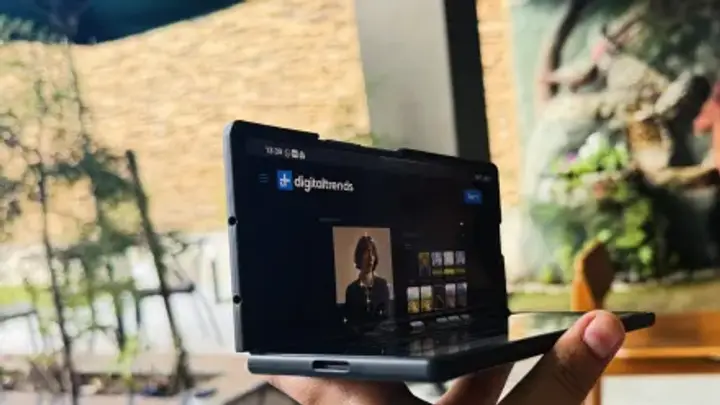
Researchers from POSTECH and KAIST have proposed a software-only way to stop people from reading a foldable phone screen over your shoulder. The method is called Fold2Unfold. It uses reflections between the two halves of an open foldable. Digital Trends reported the work on 24 November 2026, and the details come from a research paper presented at UIST '26, a user interface conference run by the ACM.
The problem is real. Privacy films and built-in privacy displays help, but a small change in viewing angle can still reveal the screen. Foldables are harder to protect. A film is difficult to apply to the inner panel, and Samsung and other makers advise against third-party films because the inner screen is fragile. The report says no flexible privacy film has yet been shown to suit a foldable.
The researchers avoided changing any hardware. The software takes the image meant for the screen and pixelates it. It then splits the picture into two incomplete images and adds camouflage blocks, so the real content is hard to pick out on either half. One half faces the owner and shows the picture directly. The other half acts as a reflector. Only when one image reflects onto the other at the right angle do the two overlap and form the full picture.
The inner camera tracks the position of the owner's eyes. It then adjusts the split images as you move. Looking straight at the screen, you see a clear picture. Someone looking from the side sees a fuzzy, blocky pattern. The team tested the method on a Samsung Galaxy Z Fold 7, and it also worked on the Galaxy Z Fold 5, which is two generations older. The team says foldables from Motorola and Huawei meet the same hardware requirements.
In the lab tests, an observer about 40 cm away, a distance similar to a packed subway car, identified only 6.5% of the digits on a keypad. Without the method, the same observer identified 99.9% of the content. Small changes also hurt the view for an observer: a 7.5 degree angle or a sideways head move of 4.6 cm, with a 35 cm gap between eyes and screen, made the text nearly unreadable. The team describes the 6.5% result as close to random guessing.
A separate preliminary check looked at movement. A researcher experienced with the system rode a campus shuttle bus and ran 20 trials. They entered the PIN correctly every time, taking 6.58 seconds on average. That check was small, and it does not show how the method would perform across many riders and phones.
The method has costs. Entering a PIN on a regular keypad took participants roughly 4.2 to 4.5 seconds. With Fold2Unfold, the average rose to 8.2 seconds. The report also mentions color artifacts on the screen. The camera runs all the time, and the display needs high brightness, so battery use goes up.
The method also has limits. It was not tested against cameras, recording devices or binoculars, so it is not complete protection. It is designed for short, sensitive content such as PINs, short codes and bank balances, not for full text messages or video. POSTECH's announcement suggests it could later help with private messages. The research paper covers only PINs and other short numerical content, so the wider claim is not yet supported.
The team says the method "significantly limits information leakage" and adds that it brings only moderate overhead in usability. The team also sees banking apps as a future use, where a user could avoid exposing balances, card numbers, PINs or passwords to a nearby onlooker. No product, release date or commercial partner has been announced, and the paper does not say when or whether such a feature would reach phones.
For now, Fold2Unfold is a research result. It shows one approach to foldable privacy, but readers cannot install it. Makers may take up the idea, and the open questions are speed, power use, display quality and protection against recording.
Enjoying this? Get the Gadgets brief
Every Monday: the gadgets worth your money.
✓ Free · seven editions · one click to leave
Original reporting by the sources above. Summary by smart-home.space.