Smart HomeNews wire, 10 h ago
Alexa+ vs Home Assistant Assist: same bulb, same commands, mixed results
Reported by How-To Geek
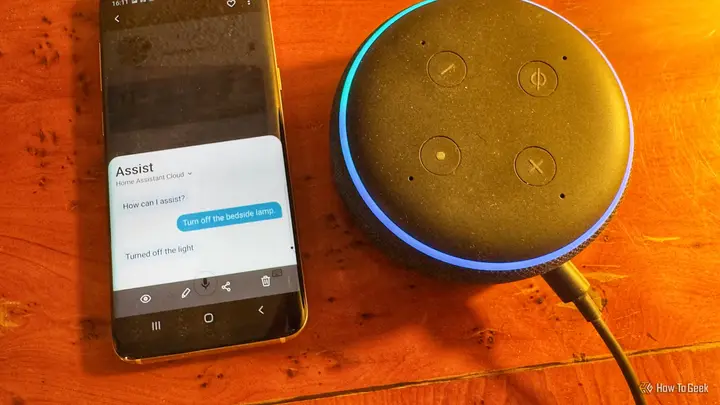
A reviewer at How-To Geek, writing on 17 November 2026, put Amazon's new Alexa+ up against Home Assistant's built-in voice assistant, called Assist. Both were linked to the same Philips Hue smart bulb, and each controlled the light through its own Philips Hue integration. The reviewer gave both assistants the same spoken commands, one after another, and recorded the results. Alexa+ is the AI-based successor to the Alexa assistant that first appeared in 2014. Amazon announced it in 2025, and the reviewer says access took a long time to arrive.
The first round covered the basics: turning the light on and off, changing brightness and colour, and setting, checking and cancelling timers. Response speed was close. The reviewer filmed the bulb to time each reaction. Across the tests, Alexa+ had a median response of 1.5 seconds, while Assist had 1.4 seconds. Timers worked on both, with similar response times and no clear difference. The reviewer also noted that Echo devices had felt slower since the move to Alexa+.
The biggest gap appeared with context. Assist works from fixed phrases and intents, so it handles typical smart home commands well but struggles with requests that do not match them. In the test, the reviewer set the bulb to 60 per cent brightness and then asked for 25 per cent instead. Alexa+ understood which bulb was meant and made the change. Assist kept asking which device was meant. Assist could still follow a simple request such as turning a light back on.
Assist can be connected to a cloud-based or local language model for better understanding. With a cloud model, the reviewer reports that Assist handled the follow-up and set the light to 25 per cent. The setup used Home Assistant Cloud for speech-to-text and text-to-speech, though both can run on local hardware instead.
The final test asked each assistant to turn on a bedside lamp and start a two-minute timer in one sentence. Alexa+ switched on the lamp but did not start the timer, and the reviewer saw the same result on repeated runs. Assist did both, then answered questions about the timer and cancelled it when asked. The reviewer said this surprised them, given that Alexa+ had been shown handling multiple actions in routines when it was announced.
The reviewer also pointed out limits to the test. It measured software only. Echo speakers pick up wake words well in noisy rooms, and they often beat do-it-yourself speakers or voice satellites. A local speech pipeline can add or remove delay depending on the hardware. Alexa+ is a paid service, though it also comes with an Amazon Prime subscription.
What is still unknown: the test covered one bulb, one room and one reviewer's hardware. The article does not give the exact hub or speaker models used, or how the results would change with other devices or a different language model. It also does not say whether the test will be repeated after Amazon updates Alexa+.
Enjoying this? Get the Smart Home brief
Every Tuesday: what changed in Matter, hubs and security.
✓ Free · seven editions · one click to leave
Original reporting by the sources above. Summary by smart-home.space.