AINews wire, 1 h ago
Local Qwen3.8-27B model vs Claude Opus 5.5 on a Raspberry Pi e-ink project
Reported by How-To Geek
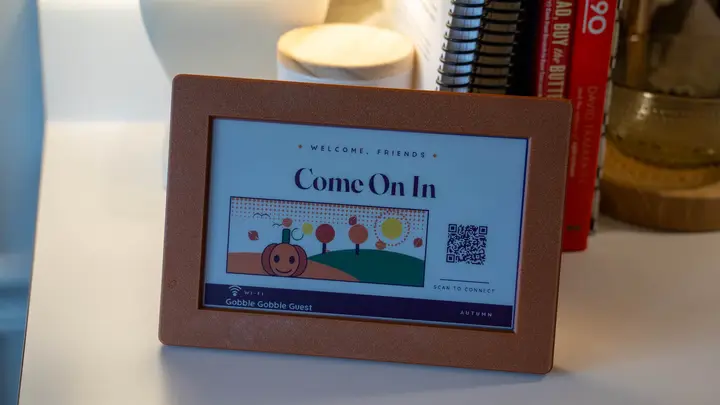
A How-To Geek writer tested whether a model that runs on local hardware can handle a real build that is normally done with a cloud service. The writer said they had paid well over $1,000 for cloud AI in 2026, mainly for Claude and ChatGPT, and that earlier offline models had fallen far behind frontier models.
The local model was Qwen3.8-27B, run in LM Studio on an RTX Spark mini PC. The writer used T3 Code with OpenCode and gave the same goal to Qwen and to Claude Opus 5.5. The goal was a Raspberry Pi project that shows a QR code for guests to join the Wi-Fi, along with the network name, simple graphics, and a password hidden by default. The hardware was a Raspberry Pi 4B with a 7.3-inch seven-colour e-ink panel, driven over SPI through a HAT.
Speed was the main gap. Qwen ran at about 23 tokens per second, which the writer called slow but usable. Some larger models on the same hardware reached only about 10 tokens per second, which the writer considered unusable.
Opus 5.5 finished in about 23 minutes in total, including one UI revision. Its first version took around eight minutes, and the revision took about 15 more. Qwen took around 2.2 hours, including one graphics revision. By the writer's account, that was nearly six times longer, and the writer judged Opus's code to be better.
Still, the writer said Qwen needed no more steering than Opus, did not get stuck in failed tool calls or loops, and produced a result much better than expected. The final output looked very different from Opus's. The writer did not run more revisions to close the gap, in order to keep the test fair. Qwen costs only the electricity to run, and nothing leaves the machine.
The writer also noted that the RTX Spark has a lot of memory but is not known as a fast system for local AI. The writer thinks faster memory would likely have cut the run time significantly. This is an opinion, not a measured result.
What is still unknown: the test covers one project, one model and one person's setup. The results may not carry over to other tasks or hardware, and the article does not report a formal benchmark.
The writer plans to keep Qwen running on the RTX Spark for routine jobs such as overnight automations, where speed matters less. For main work, the writer will keep using Opus 5.5 or whichever flagship model is best at the time.
Enjoying this? Get the AI brief
Every Thursday: AI that matters for your home.
✓ Free · seven editions · one click to leave
Original reporting by the sources above. Summary by smart-home.space.