EV & MobilityNews wire, 48 min ago
Tesla FSD as a driving aid for disabled drivers: what the claims show
Reported by CleanTechnica
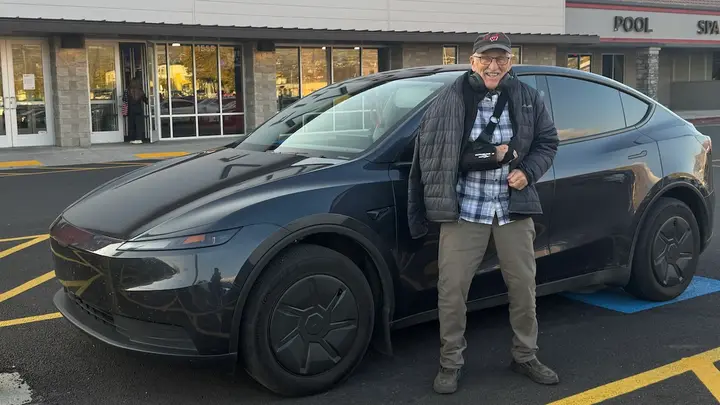
CleanTechnica published an opinion column on 21 November 2026 about using Tesla's Full Self-Driving (Supervised) system as a travel aid for people with physical disabilities. The column is written by a contributor and carries an editor's note that disagrees with its central argument. The editor says a person should use FSD for a trip only if they could make that trip fully unaided, because taking over at short notice can be harder than driving.
The writer describes several personal and family cases. After shoulder surgery, with one arm in a sling, he used a Model Y running FSD V14 to reach a gym by voice command, without touching the pedals or the wheel. He describes a relative with Parkinson's disease who has strong hand tremors and still drives with the system. He also mentions a 94-year-old woman who keeps driving to church, and a family member who could not drive for two months after a wrist fracture. In another case, the writer made a 1,500-mile trip from Wisconsin to Utah. FSD stopped working for about 500 of those miles, and he says keeping the car centred in its lane and holding the right pedal pressure became a strain for him at 86.
The column repeats the warning that FSD Supervised is meant for an unimpaired, legally licensed driver who can intervene within a fraction of a second. The writer argues that for some people with limited mobility, supervising the system is easier than driving the whole trip. The editor disagrees, saying that intervening quickly can be harder than driving oneself. The piece does not give figures on how many disabled drivers use the system, and it does not give crash or incident data for those drivers.
The column also compares Tesla with Rivian. Rivian's Autonomy+ system, offered on its Gen 2 vehicles and R2 models from 2025, uses 11 cameras and five radar sensors. According to the column, it allows hands-free driving on millions of miles of US and Canadian roads with clear lane markings. It can change lanes when the driver uses the turn signal, and it offers three drive styles for acceleration and following distance. The writer says Rivian's system cannot yet complete city and highway trips without a driver taking over, as Tesla's can. He based this on research, because a planned test drive at Rivian's Salt Lake City demo centre did not take place. He also says Rivian's wider sensor set should let it keep driving in very poor visibility in the future, though he does not give a date.
On price, the column states that Rivian's Autonomy+ comes with a 60-day trial. After that, it costs 49.99 dollars a month or 2,500 dollars as a one-time purchase. The writer says Tesla charges 99 dollars a month for FSD, with no one-time purchase option. He concludes that Tesla offers the most advanced automation for a US driver who wants to drive electric on major highways without careful planning, and he points to Tesla cars with HW4 hardware, which began shipping in mid 2023. These are his views and his own comparison, not an independent test.
Several points remain unclear. The column is an opinion piece that mixes personal experience with a stated preference for Tesla, and it does not cite independent safety data or any regulator's position on disabled drivers using FSD. The sources do not show how the two systems perform side by side on the same routes. The writer's own long trip shows that the system can stop working for long stretches, which means a driver must still be ready to drive without it.
Enjoying this? Get the EV & Mobility brief
Every Wednesday: charging, cars and costs.
✓ Free · seven editions · one click to leave
Original reporting by the sources above. Summary by smart-home.space.