GadgetsNews wire, 9 h ago
A home NAS may gain more from storage, RAM and backups than from 10GbE
Reported by XDA Developers
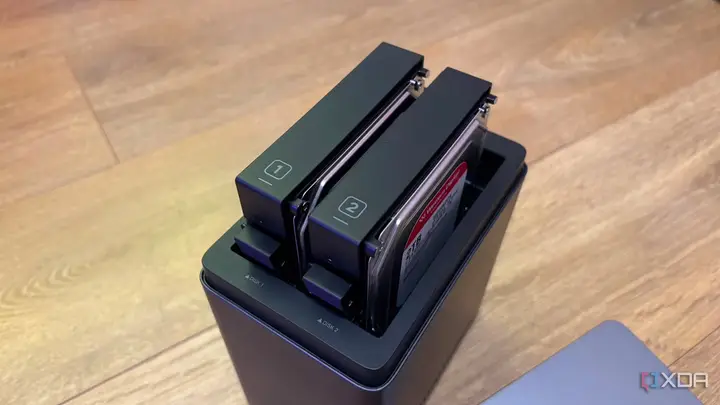
An XDA Developers article argues that most home NAS owners should not spend first on a 10-gigabit Ethernet upgrade. The author suggests the money is better used on storage capacity, flash caching, memory, processing power and backups. The piece is an opinion based on everyday home use, not on lab tests.
The main reason given is the cost of the full data path. A 10GbE link needs matching switches, network cards or adapters, cables or transceivers, and client devices, which adds cost and power use. The author also notes that the disks often limit speed first. A typical spinning hard drive array used for bulk storage cannot come close to 10 Gbps, which tops out near 1,250 MB/s before overhead. Encryption, protocol overhead and client interfaces can hold throughput well below the link speed too.
Flash and capacity are presented as the more useful upgrades. A fast M.2 NVMe drive, used as a read-write cache or as a separate flash pool, can speed up small files, container databases and metadata lookups. The gains depend on the workload and on whether the NAS has enough PCIe lanes and processor headroom. Larger drives, or a move from a single drive to a redundant multi-drive array, address capacity and drive failure directly.
Compute and memory matter too. Modern home NAS units run containers, media transcoding, checksums, snapshots and encryption alongside file sharing. A weak processor or small memory can slow the box long before a 2.5GbE link is full. More RAM gives the system room for caching, which helps when several jobs run at the same time.
Backups come next. The author stresses that RAID is not a backup. A redundant array keeps a system running when one drive fails, but it does not guard against accidental deletion, corruption, ransomware, bad updates or damage to the chassis. Suggested options are a second local target, an offsite or cloud copy, and a simple battery backup to protect against power cuts during writes or rebuilds.
The article still sees a place for faster links. It says 2.5GbE is a more sensible step for most users, since it can often run over existing Cat5e cabling and costs far less than 10GbE. Full 10GbE is justified in narrower cases, such as editing high-bitrate video from network storage or moving large virtual machine files between an all-flash NAS and a powerful workstation. Households with multi-gigabit internet or Wi-Fi 6 and 7 access points may see a clear gain from 2.5GbE.
Enjoying this? Get the Gadgets brief
Every Monday: the gadgets worth your money.
✓ Free · seven editions · one click to leave
Original reporting by the sources above. Summary by smart-home.space.